Twelve dollars for a pin. People say it out loud in shops, and you can hear the arithmetic they're doing: it's a piece of metal the size of a coin, and coins are worth less than twelve dollars.
It's a fair question, and we make them, so we should answer it properly. The short version is that the metal is the cheapest thing in an enamel pin. Everything else you're paying for is tooling, hands, chemistry and batch size. Here's where the money actually goes.
Every new design starts with a steel die. Your artwork is cut into a block of hardened steel in reverse, so the press can stamp your shape into flat metal. It gets made once, it's specific to your design, and nobody reuses it for anything else.
This is the part that surprises first-time buyers most: on a small order, the die is often the single largest line on the invoice. It doesn't shrink when you order fewer pins. It just gets divided among fewer of them.
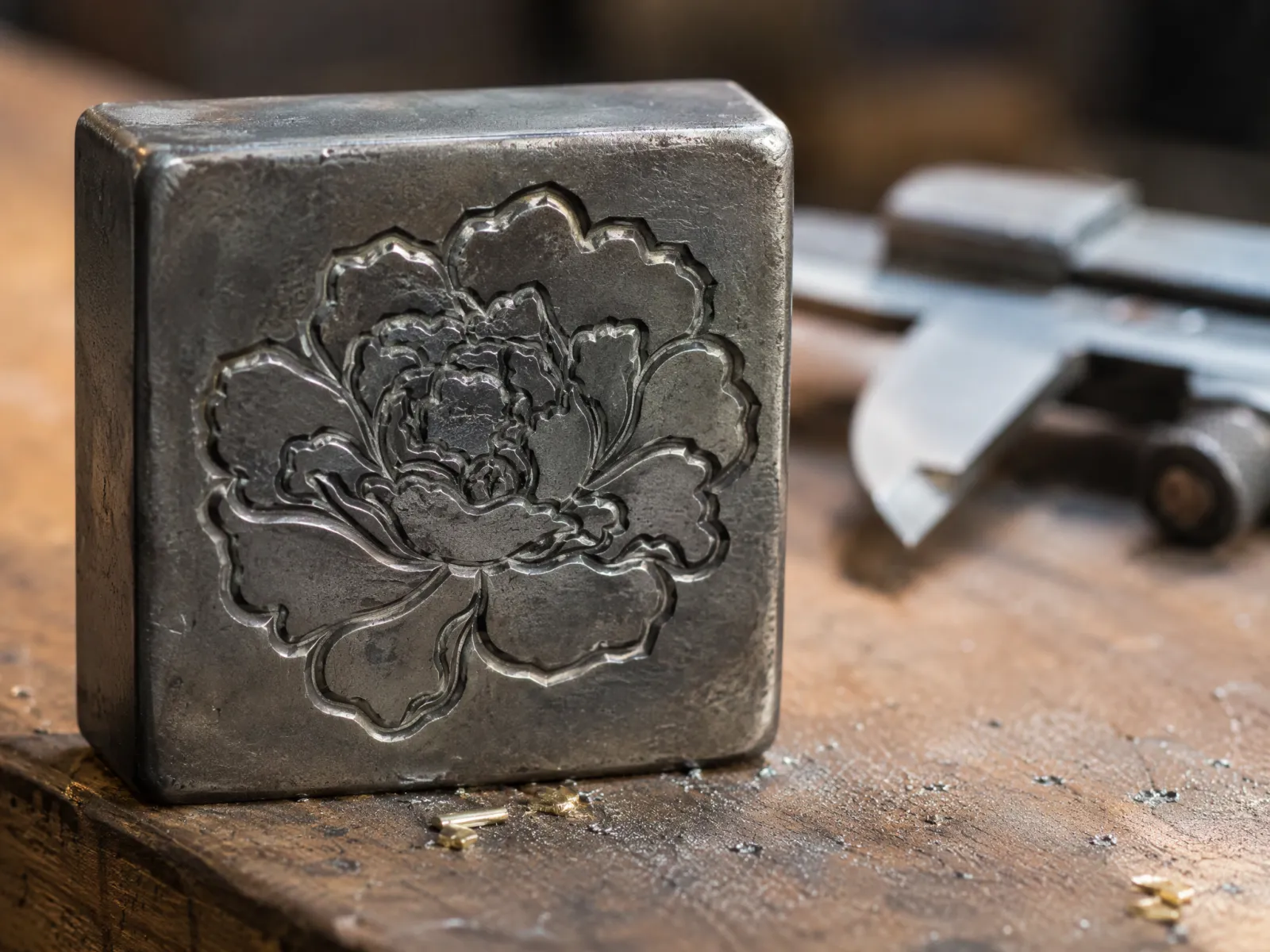
Which is why a 100-piece order and a 2,000-piece order can differ so wildly per pin, and why a supplier quoting you the same per-pin price for both is either misunderstanding the question or hoping you won't notice.
Struck metal comes out of the die with recessed cells. Those cells get filled by hand, one colour at a time, with a syringe. Then it cures, and the next colour goes in.
If you order 500 pins with six colours, that's 3,000 individual fills. Each one is somebody holding a syringe steady, checking the cell is full without overflowing, and moving to the next. It's not a machine that goes brrr. It's a room of people with good hand-eye coordination and a lot of patience.
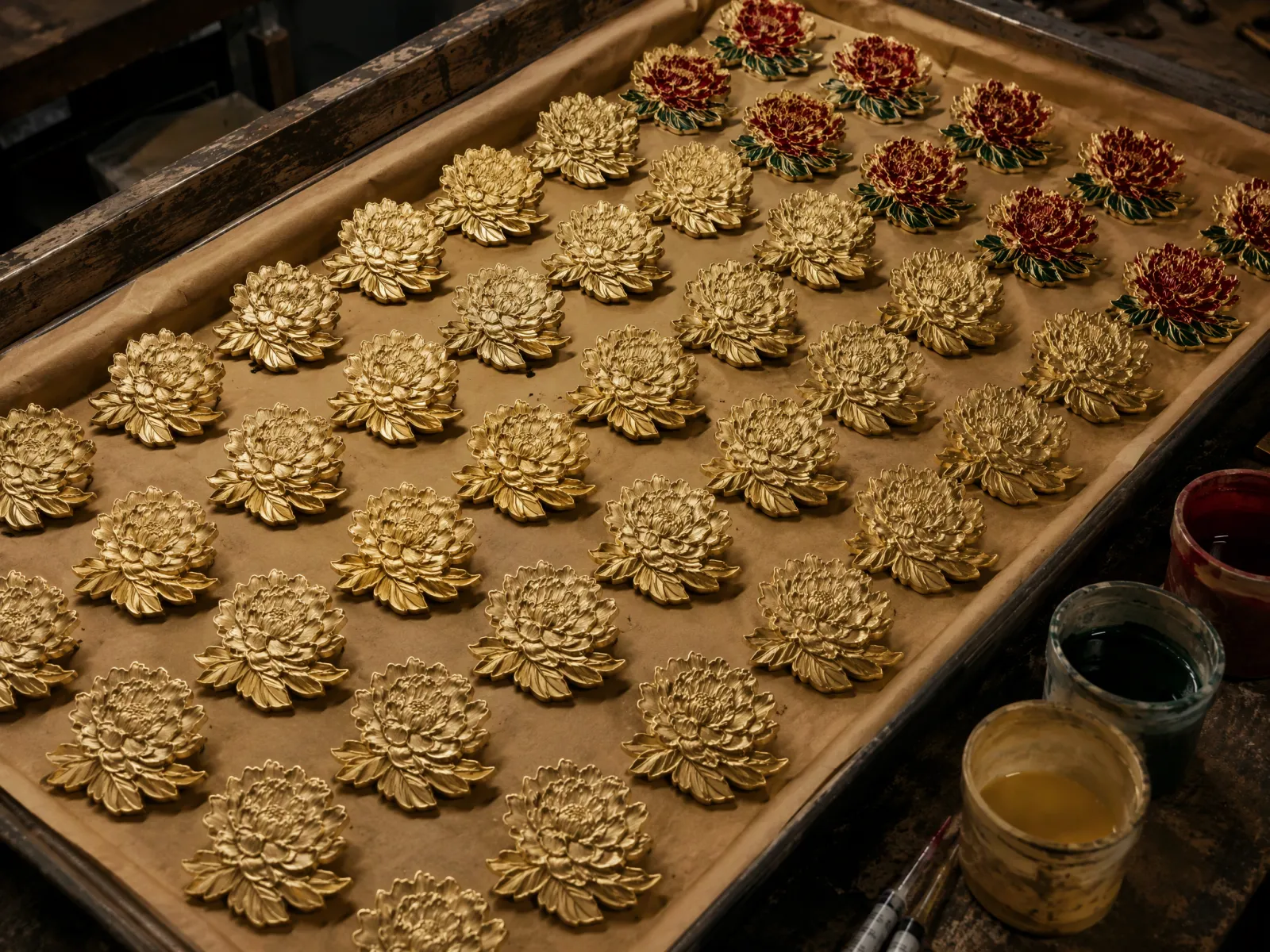
This is also why colour count drives price more than almost anything else, and why designers who cut from eight colours to four are often shocked by how much friendlier the quote gets. Four colours isn't "half as pretty". It's half the passes.
The gold, silver, nickel or black nickel finish comes from an electroplating bath. That means tanks, current, chemicals, and a process that has to be controlled or you get an uneven finish, or one that dulls within a year.
Cheap pins tend to look cheap here first. The plating is thin, slightly cloudy, or a "gold" that reads more mustard than metal. It's the hardest thing to photograph honestly and the easiest thing to cut corners on.
Set the per-piece labour aside for a second. A pin order also carries setup, sampling, tooling, packing materials, cartons, paperwork and freight booking. Those costs don't care whether you ordered 150 pins or 5,000. Order 150 and they land on 150 units. Order 5,000 and they disappear into the noise.
So the price curve isn't a straight line, and the cheapest per-pin price is never at the quantity you actually need. It's at the quantity that spreads the fixed costs far enough to stop hurting.
Someone inspects the pins. By eye, one at a time, because a pin with a chipped cell or a bent post is a return. Someone else attaches the clutch, sets the pin on a backing card, bags it, counts it, boxes it.
Then it flies or sails. Metal is heavy for its size, which is a sentence that surprises people who have never paid for freight on 40kg of pins. Cross-border orders also carry duties, documentation, and payment processing. None of it is glamorous, all of it is on the invoice.
Here's the part that isn't the factory's fault. A shop selling your pin at twelve dollars probably paid somewhere around half of that wholesale, then covered rent, staff, card fees, shipping and the ones that get stolen or scratched.
An independent artist has an extra layer: the design took them days, they paid for the die themselves, and they're carrying the risk that nobody buys it. If you're buying from an artist at a convention, a good chunk of that twelve dollars is the drawing, not the metal.
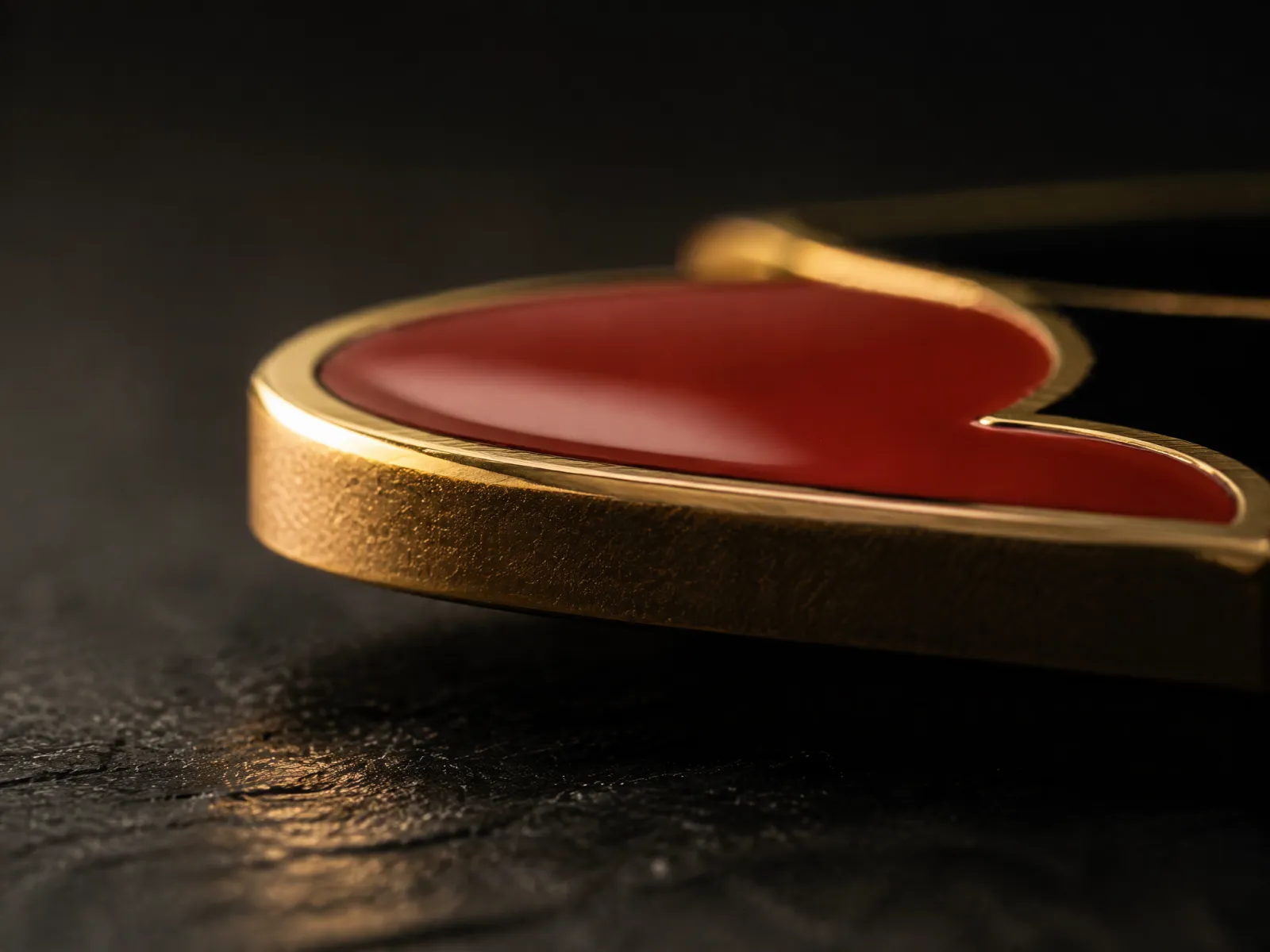
Two pins can look identical in a photo and be different objects.
We'd rather tell you this than have you find out later:
A quote that's dramatically cheaper than everyone else is usually one of four things: thinner metal, fewer colours than you asked for, no backing card or individual bagging, or a supplier who hasn't understood the design yet. The first three will show up when the carton lands. The fourth shows up as a photo of something that isn't quite your pin, three weeks before your event.
Ask for the quote broken down. Die, per piece, packaging, freight terms. A supplier who can't separate those numbers either doesn't know their own costs or would rather you didn't.
We're Kunshan Standard Gifts. We make enamel and acrylic pins in our own facility in Suzhou, have been at it since 2018, and hold ISO 9001 certification along with GPSR and CE documentation. Everything from die-striking and plating to hand colour fill, UV printing, die-cutting, epoxy dome coating and packing happens in-house, so there's no middle layer between your artwork and the press.
No minimum order, quotes back within 12 working hours, samples in about a week, and a 1,000 to 5,000 piece soft enamel run usually finishing in 12 to 15 business days after you approve the artwork.
If your design is expensive to make, we'll tell you which part is doing it and what it would cost to change. Sometimes that answer is "your design is fine, order more". Sometimes it's "this shape needs an acrylic pin instead". Either way you'll know before you spend anything.
A shop pin is made in a large run, often in a standard shape, and the tooling was paid for long ago and spread across tens of thousands of units. Your custom pin carries its own die, its own colour-matching and its own setup on a much smaller quantity.
Fewer colours, a standard size, a simple outline and the largest quantity you can realistically sell. Soft enamel is usually cheaper than hard enamel at the same spec. Skipping a custom backing card saves a little and costs you presentation.
Yes, because fixed costs don't move. The die, setup and sampling are the same at 100 pieces as at 5,000, so the per-pin price falls sharply at first and then flattens out. There's a point where ordering more stops helping; ask your supplier where that is for your design.
Up to a point. Past that point you're paying for finishes, packaging and someone's margin, not durability. The things worth paying for are even colour fill, clean plating, a complete outline and a supplier who communicates.
