If you've lost a pin, you probably blame the pin. Or the jacket. Or the fact that you're apparently not allowed to have nice things.
Here's the less satisfying truth: the pin almost never fails. It's a solid piece of stamped metal with a welded post. What fails is the little spring clip on the back, a part roughly the size of a fingernail that costs a fraction of a cent and takes all the load every time you shrug your shoulder.
We make pins and we ship them with these backs, so we've heard every version of this story. Here's what's actually going wrong, and what to do about it.
There are really only three ways a pin goes missing.
The clutch let go. You find the pin on the floor with the back still attached. Or worse, you find the back on the floor and the pin is gone. That's a grip problem.
The pin rotated or tilted out. Common with heavy or long designs on a single post. Gravity does the work over an afternoon.
The post tore through the fabric. Happens on thin knits, mesh, and anything with a loose weave. The hole widens, the pin leans, the clutch loses its grip.
Different causes, different fixes. Most people replace the pin and keep the same back, which is why it happens again.
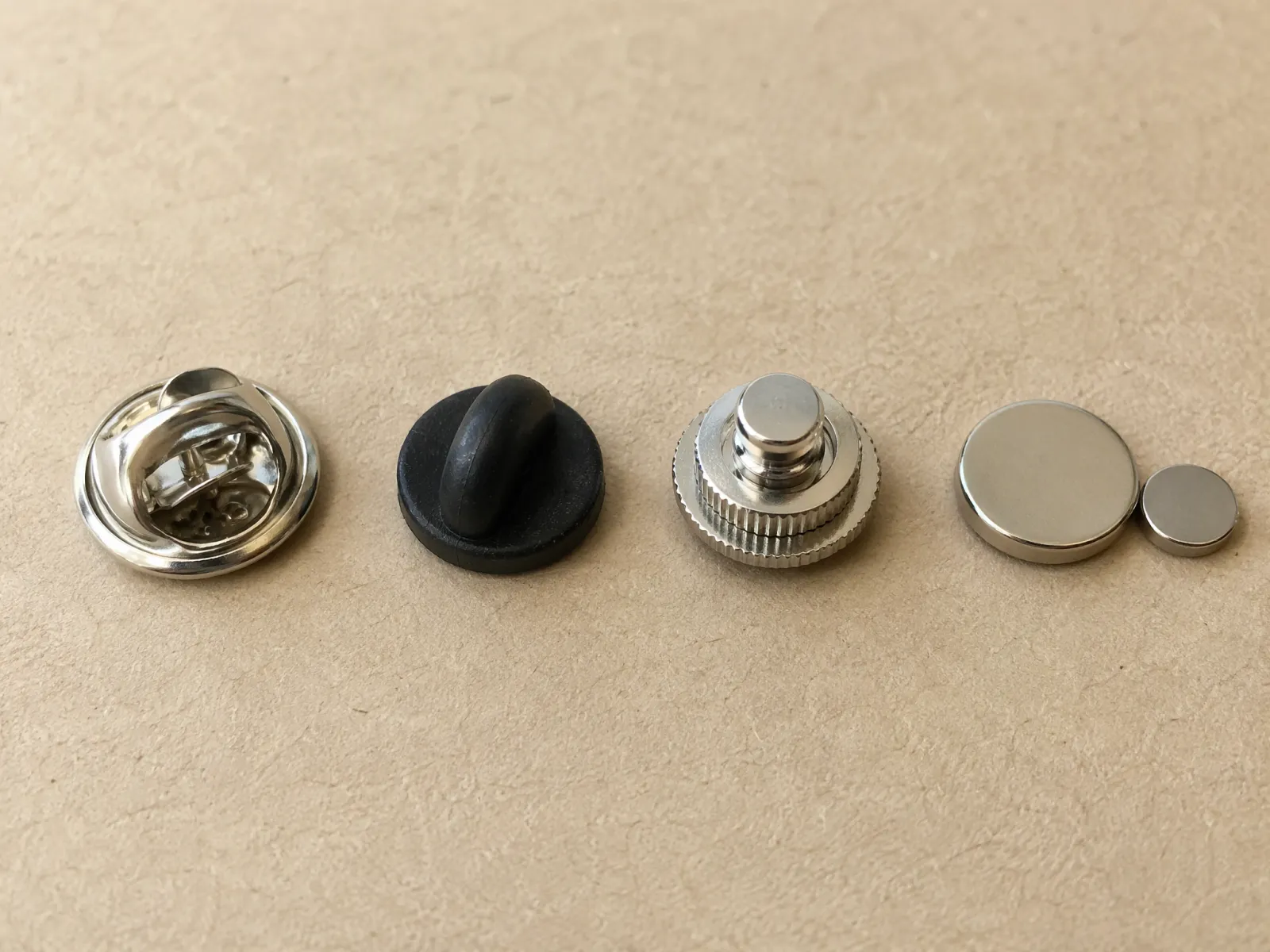
| Back | How it holds | Good for | Watch out |
|---|---|---|---|
| Butterfly clutch (the flat metal one with two wings) | Two spring-steel wings pinch the post | Cheap pins, light wear, display | Loses tension over time; the wings bend outward |
| Rubber clutch (black, domed) | Friction and grip on the post, no spring to fatigue | Everyday wearing, bags, jackets | Wears out eventually, but fails slowly instead of suddenly |
| Locking back (with a small cap you pull) | A collar clamps the post; you release it deliberately | Expensive pins, pins you wear often | Bulkier, slightly fiddly to remove |
| Magnetic pair | Two magnets sandwich the fabric, no hole | Delicate fabrics, no-damage display | Slides on thick fabric; keep away from cards and medical devices |
If your pin came with a butterfly clutch and you wear it more than once a month, that's your problem right there. It's the cheapest fastener in the industry and it's on the majority of pins, including plenty of expensive ones.
Buy a bag of rubber or locking backs and put them on the pins you actually wear. It's the single highest-value five minutes in this article. Keep the original metal clutches for display boards, where nothing is pulling on them.
This is also the fix to make before the pin falls, not after. Once you've lost the pin, a better back is a sad little purchase.
A single layer of shirt cotton is about 0.2mm thick. The clutch is designed to clamp a post, not to grip a moving piece of cloth. When the fabric moves independently of the pin, it works the clutch loose, one small movement at a time.
Put the pin through a lapel, a pocket flap, a strap, a seam allowance, or anywhere the fabric is doubled. You'll feel the difference immediately: the pin sits still instead of swinging.
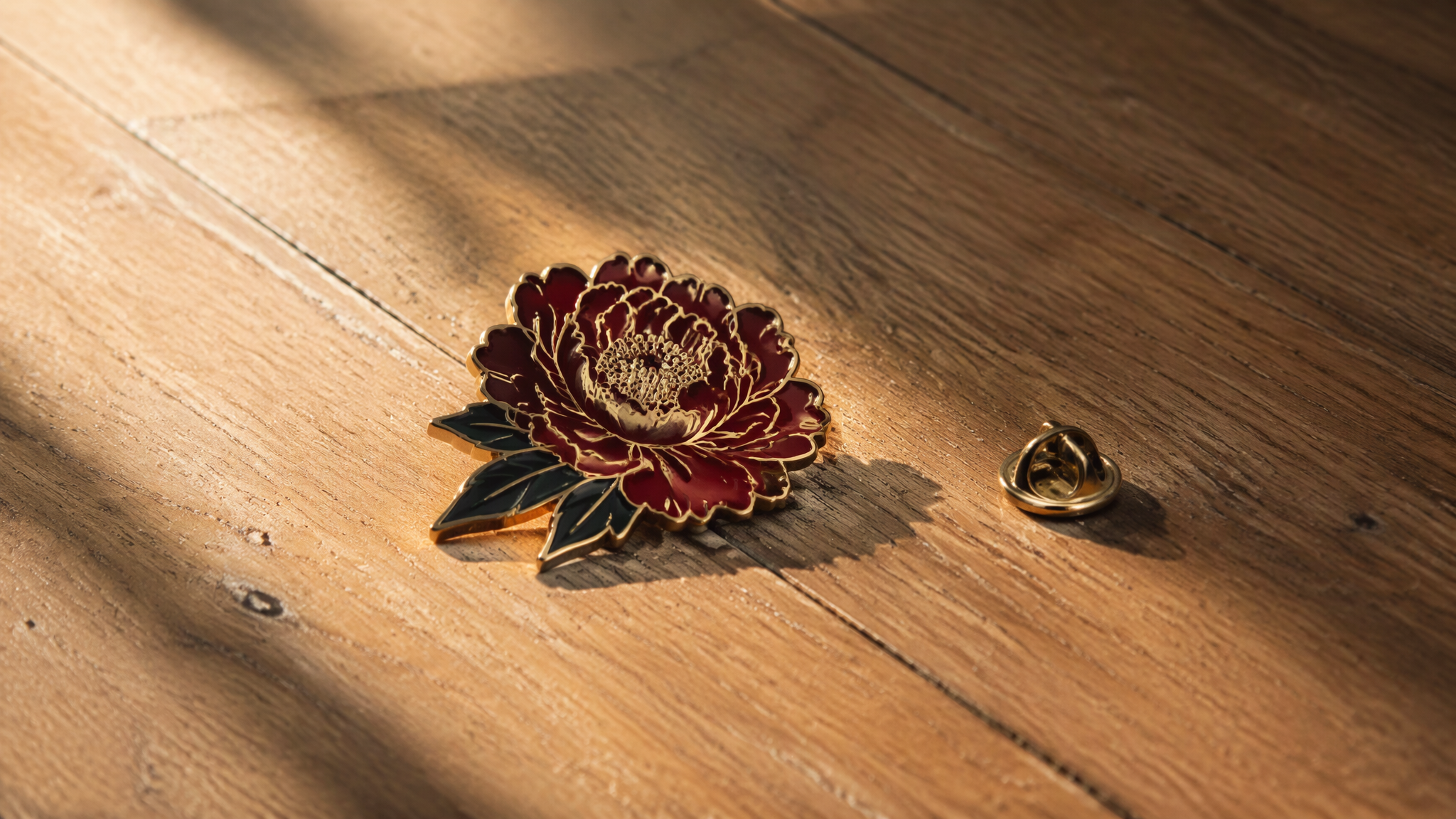
Backpack mesh, sports jersey fabric, stretchy tote straps, anything with holes you can see through. The post goes in easily, which feels reassuring, and then the hole quietly grows until the clutch has nothing to hold.
If a bag is the only place you want to wear it, put the pin on a webbing strap or a leather patch, not the mesh panel.
Two posts instead of one does two things: it doubles the grip, and it stops the pin rotating. Long or heavy designs on a single post will always droop, because the pin is a lever and the post is a pivot.
If you're ordering custom pins, ask whether a second post is available. It's a small change to the die and it's the difference between a pin that survives a jacket and one that lives in a drawer.
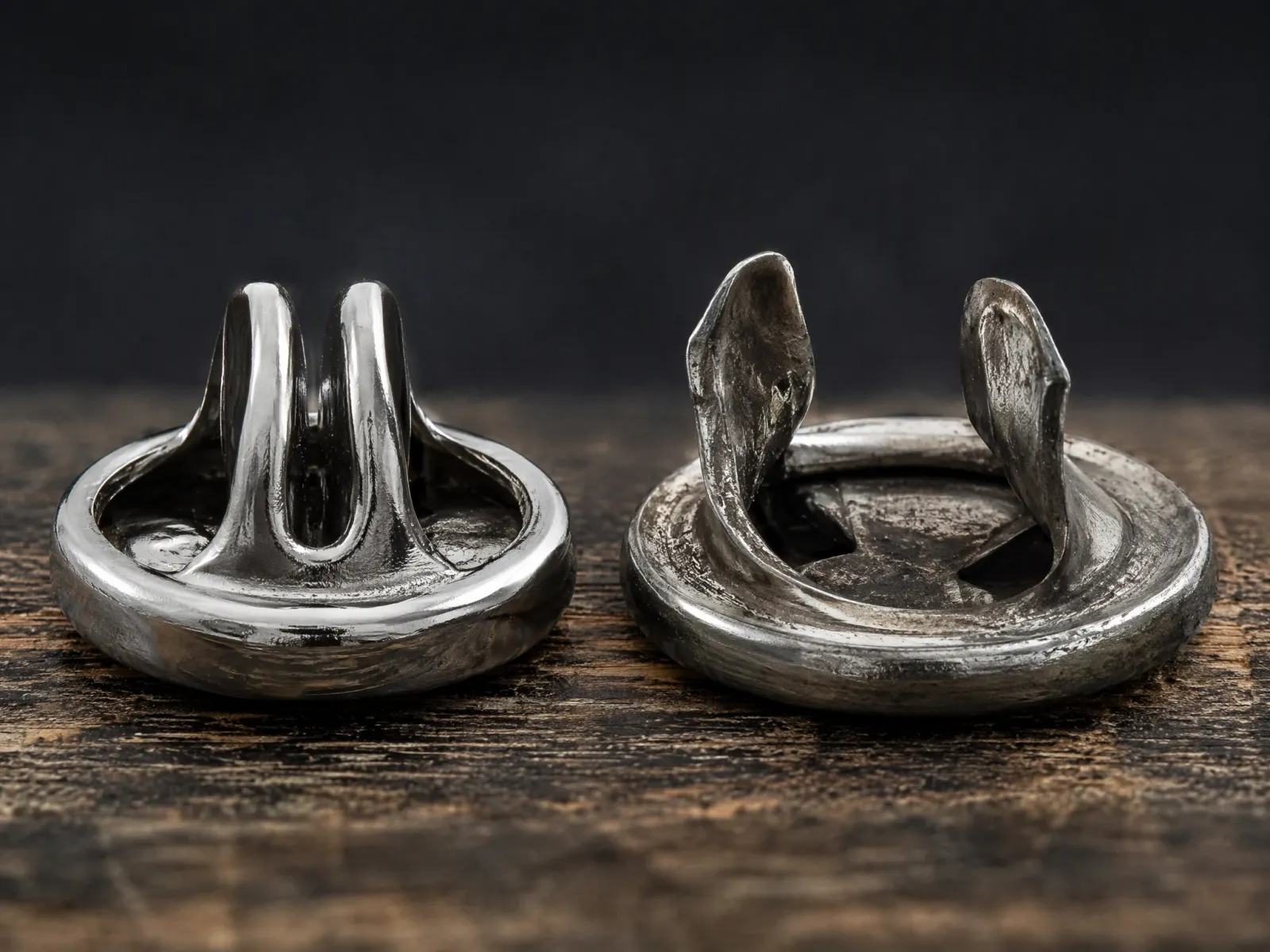
Butterfly clutches can often be brought back. Gently squeeze the two wings toward each other at their base, not at the tips, with small pliers or even your fingers. You're trying to close the gap that the post passes through, a fraction of a millimetre at a time.
Squeeze, test on the pin, repeat. Stop when it grips. If the wings are already bent outward at the tips and the metal looks fatigued, it's done. Spring steel doesn't come back from that.
A silicone earring back, the little clear bullet-shaped ones, will hold a pin post surprisingly well and is genuinely kinder to fabric than a metal clutch. So will a small piece of pencil eraser pushed onto the post, which is not elegant but has saved more pins at conventions than any product ever sold.
Keep two silicone backs in your wallet. They weigh nothing and they've rescued a lot of pins.
For big pins, especially on a soft jacket, the fabric itself is the weak point. Cut a small square of felt, interfacing or even masking tape and put it on the inside of the garment, then push the post through it and the fabric both. The load spreads over a larger area instead of one pinhole.
This is what people do with heavy medals, for the same reason.
Two of the most common ways to lose a pin have nothing to do with the fastener.
Washing machines are brutal and a pin in a drum is a projectile. And a pin left on a jacket that goes into an overhead bin or a checked bag gets knocked against thirty other objects by someone who doesn't know it's there.
Thirty seconds of removal, twice a week. That's the whole tip.
Loose pins in a pouch grind against each other, bend posts and lose their backs. A piece of felt on a frame, a cork board, or a purpose-made pin board keeps them visible and intact, and means you notice a missing back before you notice a missing pin.
The fastener is the cheapest component in your product and the one your customer will blame you for. Three things worth doing:
Our pins ship with butterfly clutches as standard, with rubber caps, safety pins and magnetic backs available as alternatives. Ask for them when you order and we'll match the back to how the pin will actually be worn, not just what's cheapest to pack.
Sometimes a pin just goes. A clutch fails on a Tuesday, you're late, you don't notice. That's not a defect, that's a small object living in a big world. Buy the replacement back, learn the lesson, and put the next one through a seam.
Usually because the clutch has lost spring tension, or because the pin is on a single layer of thin, flexible fabric that works the clutch loose as it moves. A rubber or locking back plus a placement through doubled fabric solves most cases.
For pins you wear regularly, yes. They grip harder and they release on purpose instead of by accident. For display boards, a plain clutch is fine because nothing is pulling on it.
Yes, and it's the kindest option for delicate fabric since it makes no hole. Magnets slide more easily on thick or slippery fabric, so they suit jackets and display purposes better than backpacks.
Not necessarily. Plenty of well-made, gold-plated pins ship with the cheapest clutch available. The pin's quality and the back's quality are two separate decisions, which is exactly why swapping the back is worth doing.
