Maybe you own a few yourself, and someone has asked you — reasonably — what the point actually is. It's a small stamped piece of metal with a pin on the back. It doesn't keep you warm. It doesn't tell the time. It costs more than a sticker and does less than a keyring.
Fair question. Here's the answer, from a workshop that has made rather a lot of them and wears more than is sensible.
A t-shirt with a slogan has to be read, and reading is effort. A pin is a picture, and pictures land faster than words. The right person sees a mushroom, a crescent moon, one particular shade of green — and knows something about you instantly, before either of you has decided whether to talk.
That's the whole trick. A pin is a sentence you can wear, and it handles the introductions you'd rather not make out loud.
1. It makes a plain jacket yours.
A denim jacket off the rack looks like everybody else's denim jacket. Four pins later it looks like nobody else's. This is the cheapest way to customise something you already own, and the only one that doesn't involve a sewing machine.
2. It's proof you were there.
The gig. The convention. The museum you dragged yourself to on a wet Tuesday. A photo of that day lives in a camera roll nobody scrolls through. A pin lives on your bag, in public, for years. It's a receipt you can wear.
3. It gives strangers an easy way in.
"Where did you get that?" is a far gentler opening line than anything else you could be wearing. Half the people who collect pins will tell you they're not especially outgoing, which is exactly why they own a jacket that does the talking.
4. It's a collection that fits in a frame.
Stamp collectors need albums. Sneaker people need a spare room. A hundred pins fit on a piece of felt the size of a picture frame, and they look better the more crowded it gets. Low cost of entry, tiny footprint, no shelf to dust — that combination is why people slide into collecting without noticing.
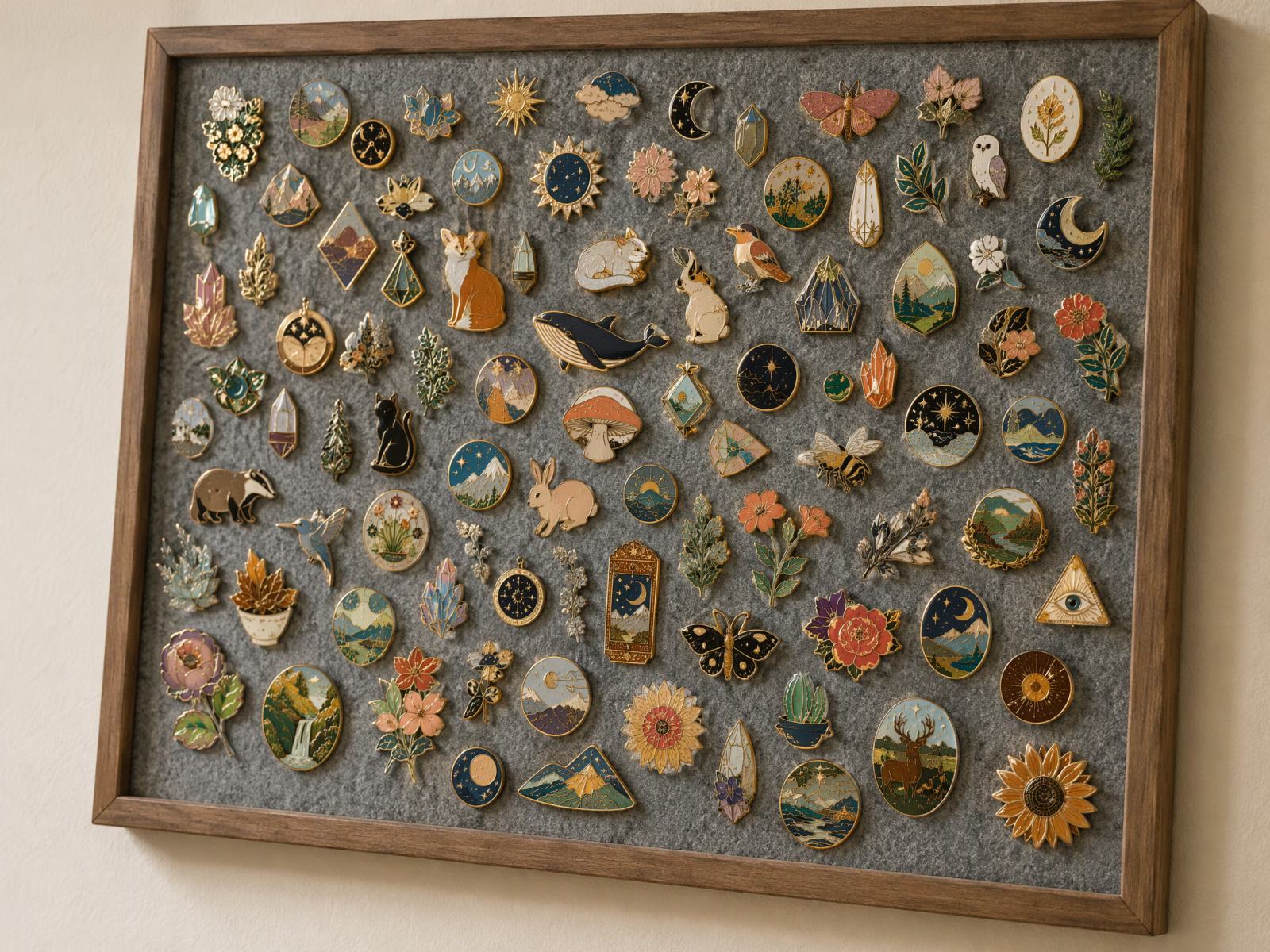
5. It's the part of the outfit you actually chose.
Most of what you wear in a day, you had to wear. The pin is the bit that's purely preference. It's also why a pin makes such an easy gift: no size, no expiry, no dietary restriction, no guessing at someone's taste in books. If you know one thing about a person — their dog, their job, the band they've seen four times — there is probably a pin for it.
Pins are collectable for slightly accidental reasons.
They're small enough to buy on a whim and cheap enough that the whim wins. Nobody feels guilty about a pin the way they feel guilty about a fourth pair of shoes. Limited runs genuinely do sell out, which gives the whole thing a hunt. And they're designed to be shown, so the collection is visible to other people rather than filed away where nobody sees it.
Then there's the trade. Artist alleys, conventions, online swaps — pins move between people in a way that most objects don't. A pin you've stopped wearing can become a pin someone else has been chasing for two years.
If you're just starting, the advice we'd give a friend is: buy one pin from somewhere you actually went. Not from a shop that sells everything. From the place, or the band, or the exhibition. The pins you keep are the ones with a story attached, and you can't retrofit a story onto an impulse purchase.
Most pin regret comes from the same five things. Here's what's worth checking before you pay.
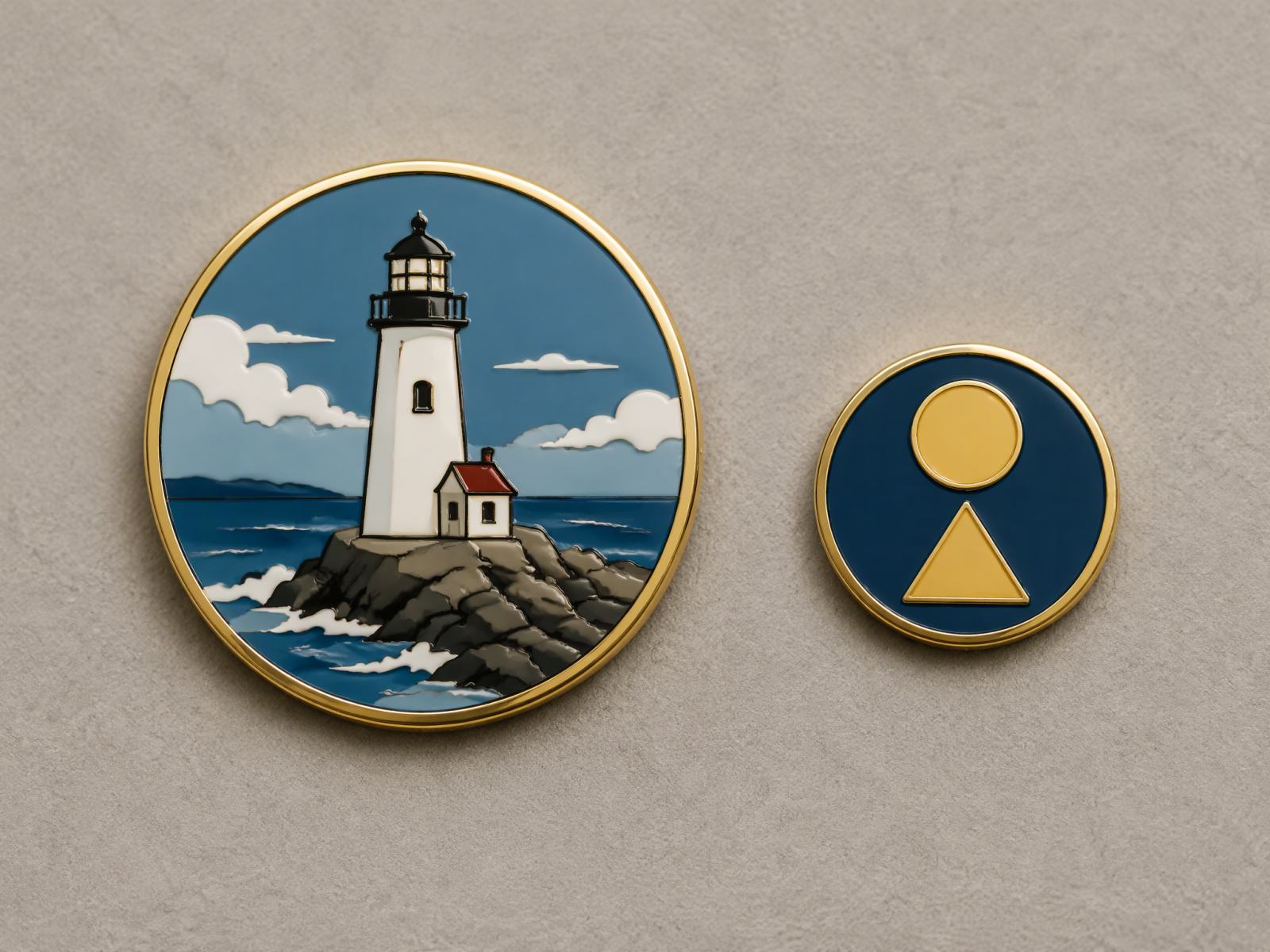
Size first, design second. Around 20–25mm reads as a small mark, which is the safest place to start. 30–40mm is the classic lapel size and the one most people end up wearing most. Past 50mm you're buying a statement piece, and it wants a denim jacket or a tote bag rather than a shirt — a big pin on light fabric will drag the cloth out of shape.
Soft enamel or hard enamel. Soft enamel leaves the colour sitting slightly lower than the metal lines, so you can feel the ridges when you run a thumb across it, and it usually costs a little less. Hard enamel is polished flat to the same level as the metal, so the surface is smooth and grime doesn't collect in the recesses. Neither is better. Hard reads as more premium; soft has slightly more depth in the colours.
Know when enamel is the wrong answer. Enamel is flat colour sitting in cells. Gradients, photo-like shading, and small lettering will not survive it. If your design is full-colour artwork with fine text, you want a printed acrylic pin, not an enamel one. Being honest about that saves a lot of disappointment.
Plating changes everything. Gold warms a design up; black nickel makes it look harder and suits darker artwork; antique finishes look older than the pin is. It's also the part that decides how a pin ages — nickel dulls faster than gold with daily handling, and on an object whose whole job is being looked at, that matters more than the price difference suggests.
Look at the back before you commit. If a pin comes with a basic butterfly clutch and you plan to wear it weekly, buy a handful of rubber backs and swap them. A couple of dollars of hardware and five minutes, and the pin stops falling off your jacket.
Detail has to fit the size. In enamel, lines thinner than roughly 0.3mm close up during filling, and text under about 2mm tall becomes a smudge. A design that only works at poster size will look muddy at 25mm. If a maker won't tell you that up front, that's worth noticing.
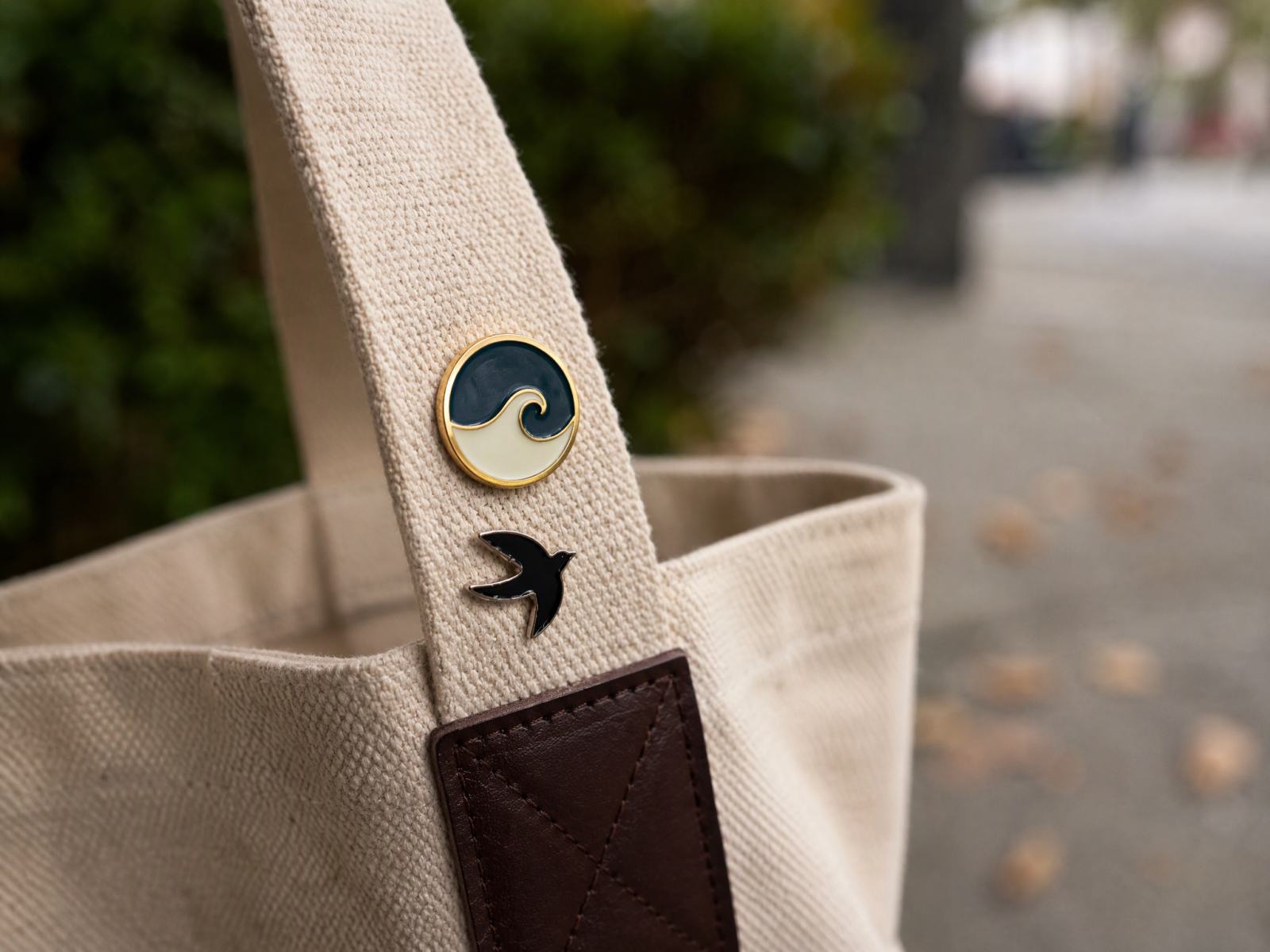
Cluster, don't scatter. Three to five pins grouped on one lapel or one bag strap reads deliberate. Ten pins spread evenly across a jacket reads like a school blazer.
Pin through doubled fabric. A lapel, a pocket flap, a seam, a denim yoke. Two layers hold a clutch far better than one thin layer of cotton, and the pin stops swinging.
Avoid mesh and stretch fabric. Backpack mesh, sports jerseys, elasticated straps. The hole widens quietly until the back has nothing to grip.
Take them off for laundry and travel. A pin in a washing machine is a small projectile, and a pin left on a jacket in an overhead bin gets knocked about by people who don't know it's there. Thirty seconds, twice a week.
Store them on a board, not in a bag. Loose pins grind against each other and bend their posts. A felt board, a cork board, or a framed piece of fabric keeps them visible — and means you notice a missing back before you lose the pin.
Eventually every collector hits this: you can picture exactly the pin you want, and nobody makes it.
That's the part of the job we like. You send artwork — a drawing, a finished file, even a rough sketch — and we come back with a digital mockup to look at before anything is cut. Samples take about 5–7 days. On the soft enamel side, production runs from 1,000 to 5,000 pieces and takes roughly 12–15 business days after artwork approval, with plating, attachments and add-ons like glitter or glow-in-the-dark chosen along the way.
You can see the finishes on our enamel pins, compare how printed colour looks on acrylic pins, or read the full spec list on the custom soft enamel pin page. No pressure and no obligation — half the people who ask us for a mockup are just checking whether their idea works at 25mm.
The point is that it's a small, cheap, durable object that carries a bit of who you are. Nothing about it is efficient. It has no battery, no screen, and no way to be scrolled past.
That's exactly why it works. A phone can hold ten thousand photographs and show them to nobody. A pin is visible from three metres away and asks nothing of anyone.
People don't wear pins because they have to. They wear them because they want the thing on their jacket to be that thing. Which is, honestly, as good a reason as most of us need for anything.
Soft enamel leaves the colour slightly recessed, so you can feel the metal lines. Hard enamel is polished flat so the surface is smooth. Hard reads as more premium and stays cleaner; soft usually costs less and has a bit more depth in the colours. Neither is a quality upgrade over the other.
The metal underneath is zinc alloy, brass or iron, and the plating is what protects it. Gold and black nickel hold up well over years of handling; plain nickel dulls faster. Keep pins out of the wash, dry them if they get wet, and don't scrub the plated edge with anything abrasive.
Yes, and it's the safest place to start, since the fabric is heavier and the pin isn't swinging against your body. Avoid the mesh panels — use a webbing strap or a leather patch instead.
A soft dry cloth, and a slightly damp one for anything sticky. Don't use metal polish or alcohol on the plated rim; it takes the finish off rather than restoring it.
Usually it's the number of colours, the size, the plating, and the size of the run — not the metal. We wrote a whole piece on pin pricing in the journal if you want the long version.
On a wool lapel, yes, but use a smaller pin (under 30mm) and put it through the lapel buttonhole or just behind it. Heavy pins will pull the wool out of shape.
