If you have ever stood in a museum shop holding a pin the size of a coin and wondering why it costs more than lunch, you're not being cheap. Pin pricing is genuinely strange, because the object in your hand tells you almost nothing about what went into it.
The short version: most enamel pins sold to people who actually wear them land between $8 and $15. Ten to twelve dollars is the crowded middle for a standard one to one-and-a-half inch pin from a small shop or an independent artist. Under $5 and you're usually looking at a different object, made a different way. Above $20, you should be able to point at the reason on the pin itself.
Everything below is how to tell which of those you're holding.
A pin is a few grams of brass or zinc alloy. As raw material it's worth less than the card it's mounted on.
The money goes into the things that aren't metal. A steel die has to be cut with your exact shape and every colour cell in it, and that die costs the same whether you make a hundred pins or ten thousand. Each colour is filled by hand, so a five-colour pin passes through five people or five passes. Then it's plated in a bath of gold, silver, nickel or black nickel. If it's hard enamel, it also gets polished flat, which is an extra step and an extra way to ruin a batch.
Public price sheets from pin manufacturers show the shape of this clearly. A one-inch soft enamel pin is typically quoted at roughly $2.90 each at 100 pieces, about $1.70 at 300, and around $1.20 at 1,000. Same pin. Same die. A third of the price, because the fixed costs got divided among more people.
So part of the gap between a $3 pin and a $12 pin is quantity, not greed.
Between the factory gate and the shop shelf, a pin picks up a lot of company:
That last one explains more about small-run pricing than any markup theory.
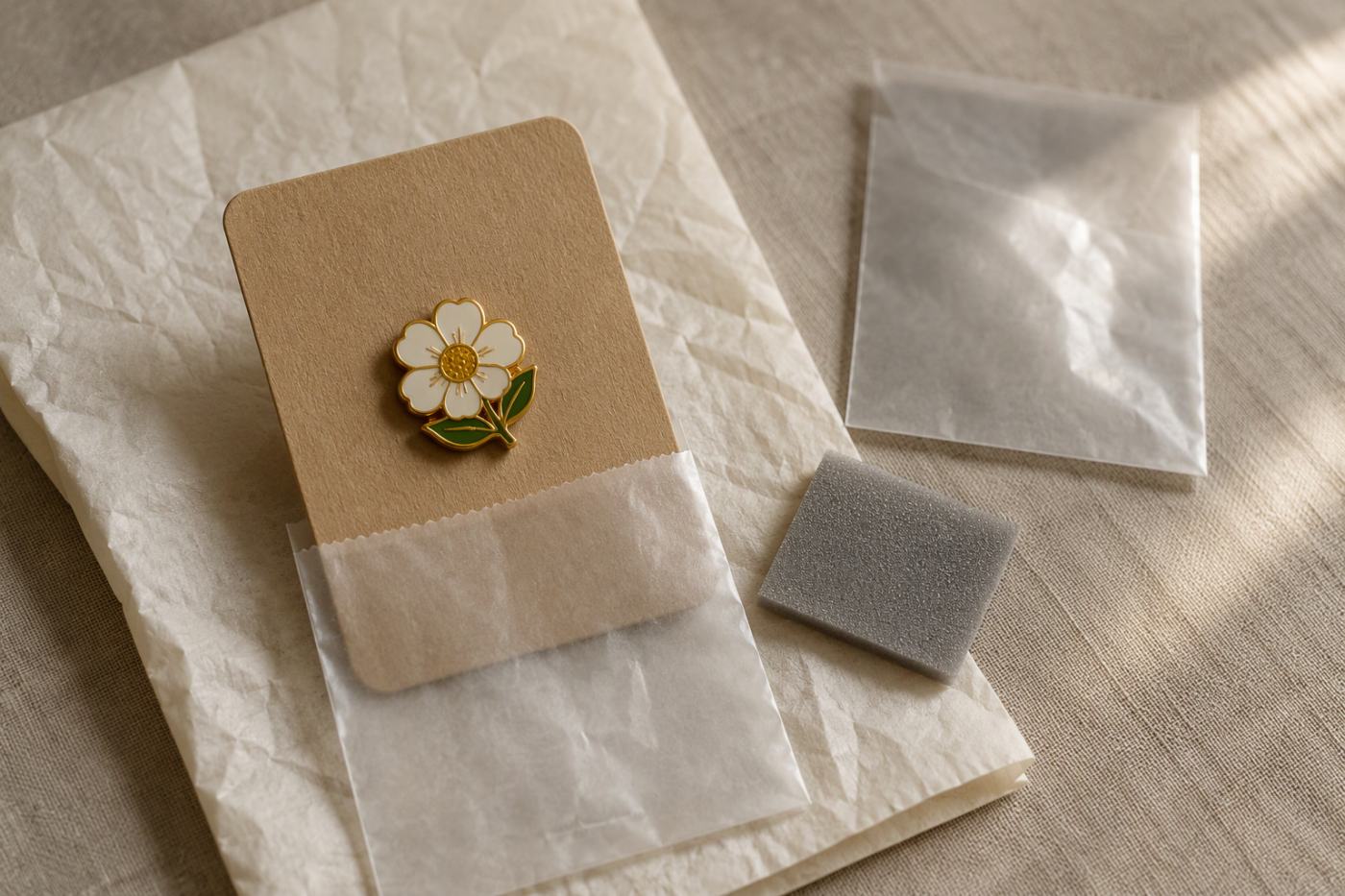
Under $5. Almost always mass-produced soft enamel or printed pin from a very large run. Thin metal — often around 1.5 mm — simple or no packaging, stock art or licensed art. Not automatically bad. Some are genuinely nice objects. But the metal is light, the plating is basic, and the design was not made for you.
$8 to $15. The normal range for a pin somebody actually designed. One to one-and-a-half inches, hard or soft enamel, named plating, a printed backing card. Most artist and museum-shop pins live here, and this is where the price is easiest to justify.
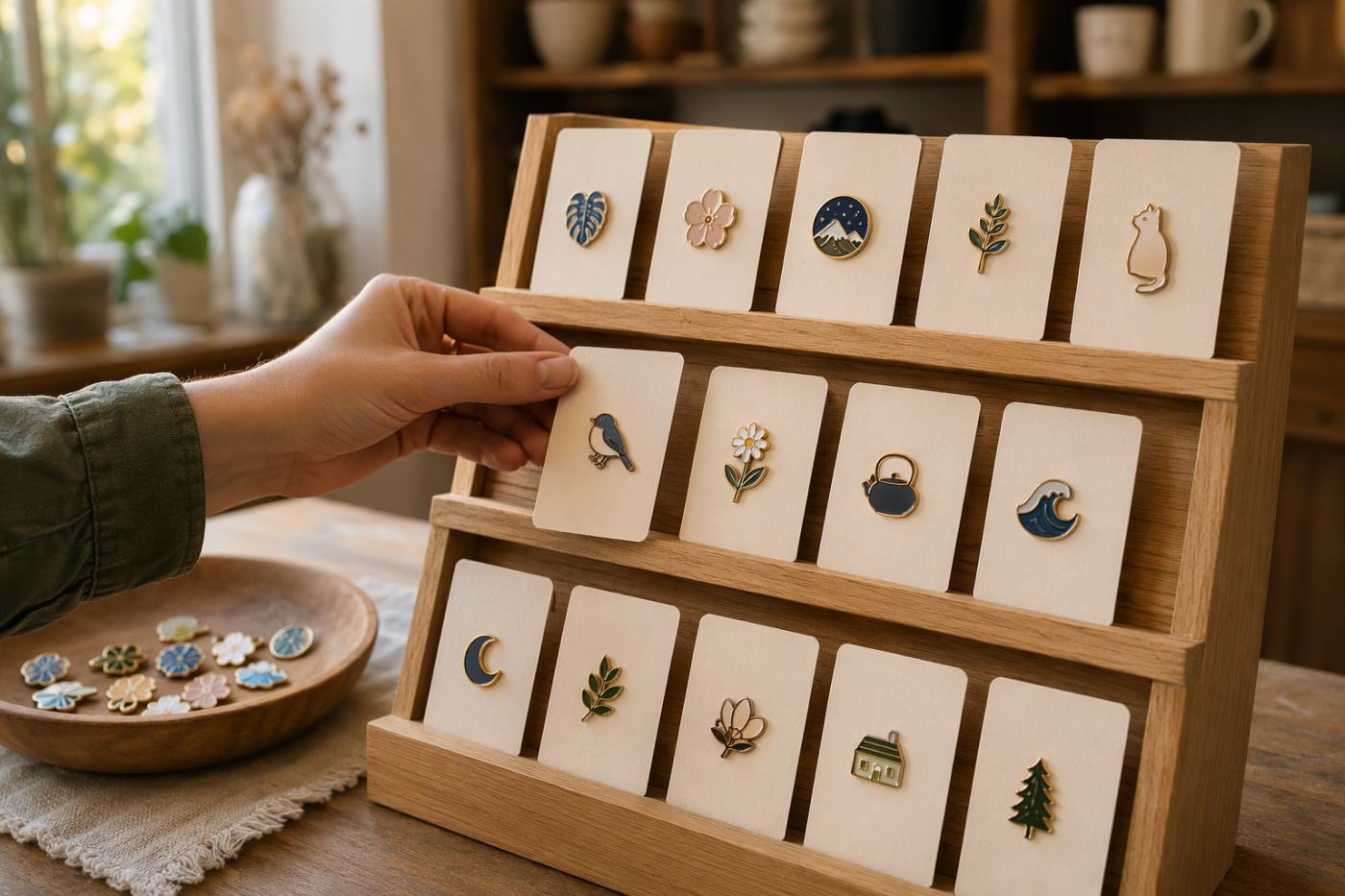
$15 to $25. Bigger pins, two inches and up. More colours. Special finishes — glitter, stained glass, epoxy dome, two-tone plating. Genuinely small runs. Or a licence attached to the design. You're paying for extras and for scarcity, which are both legitimate reasons.
$25 and up. Oversized pieces, cloisonné, hand-finished work, numbered editions, or an artist whose name sells the pin on its own. Perfectly fine if that's what you collect — just don't assume it's better made than a twelve-dollar pin. Usually it's bigger or rarer, not tougher.
When you compare any two pins, compare the same things: size in millimetres, hard or soft enamel, number of colours, plating, and what it comes mounted on. A two-inch hard enamel pin with eight colours at $18 is better value than a one-inch soft enamel at $9, and it isn't close.
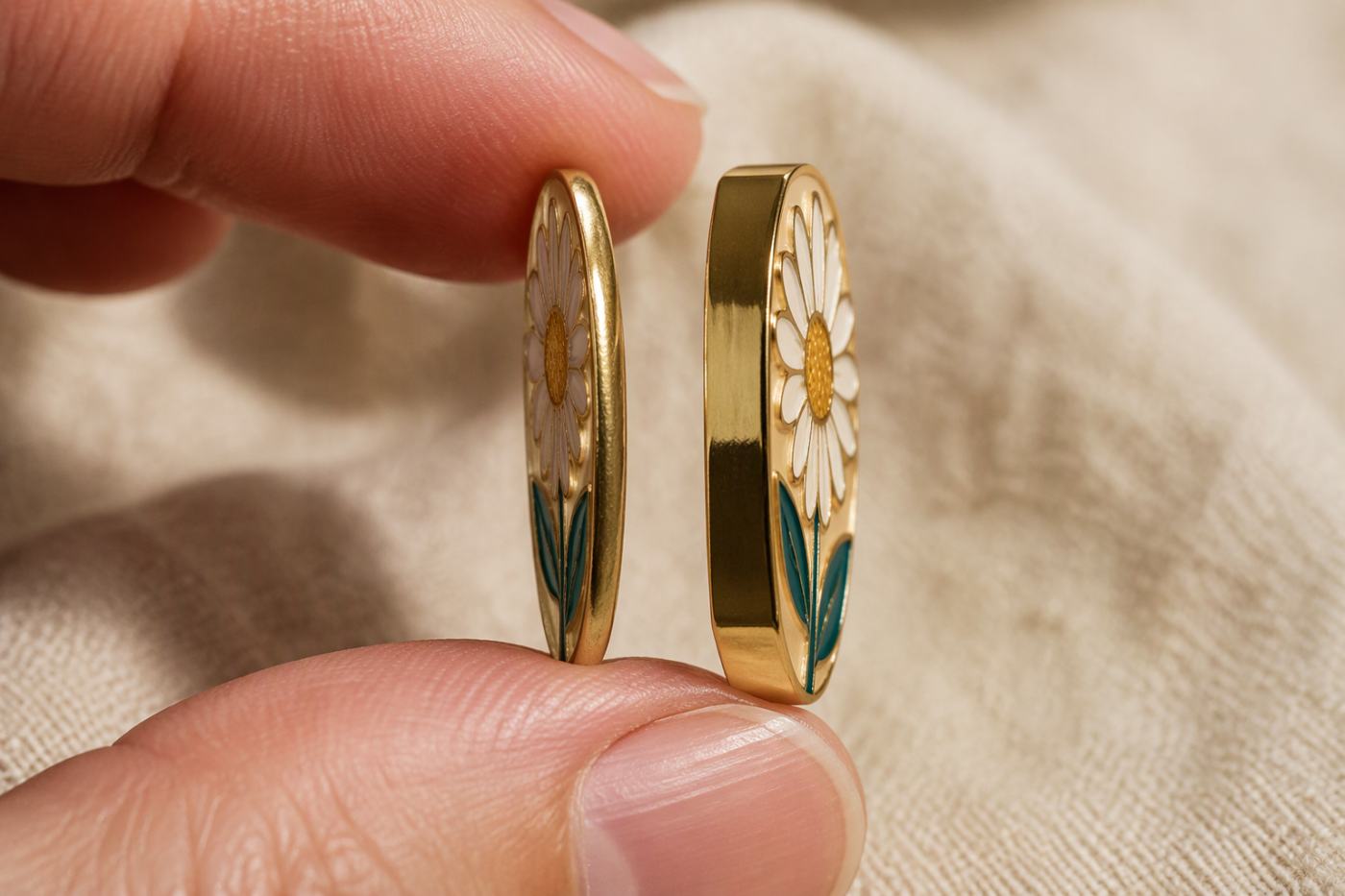
None of that is a compromise. It's just a different job.
For custom pins, the price that matters is per piece at your quantity, not the total.
Published quotes put one-inch soft enamel at roughly $1.20 to $3.00 per piece somewhere between 100 and 1,000 pieces, with hard enamel adding a third to a half on top — call it $1.50 to $3.30 across the same range. Below a hundred pieces the per-piece price climbs fast, because the die doesn't care how few pins you want.
This is why factories set minimums. Ours is 1,000 pieces, which is roughly the point where a per-piece price stops being silly. If you only need twenty, you're better off with stock designs or a small maker who runs batches and prices them accordingly.
If you do order a run: artwork and a free digital mockup first, a physical sample in five to seven days, then twelve to fifteen business days of production once you approve. The sample is the last cheap moment to change a colour. After that, changes cost money and time, in that order.
Standing in front of a pin you're not sure about, ask:
No. Ten dollars is the middle of the normal retail range for a one to one-and-a-half inch pin from an independent seller, and it usually includes a backing card and packaging. It only becomes too much if the pin turns out to be thin printed metal rather than enamel.
Because they were made in the tens of thousands, in a thin gauge, usually printed or simple soft enamel, with no packaging and no original artwork. The price is honest — it's just a different product from the one you were picturing.
For one pin, no. The die is charged regardless of quantity, so a single custom pin carries the entire tooling cost. If you want one, buy an existing design, or make a craft version at home and accept that it won't be enamel.
Published manufacturer price sheets put 100 one-inch soft enamel pins at roughly $220 to $300 in total, including the one-time die. Hard enamel at the same quantity runs higher. Treat any quote far below that with suspicion, and any quote far above it as a question worth asking.
Yes, roughly in proportion to area rather than diameter. Going from one inch to two inches is four times the metal and four times the colour, so expect the per-piece price to rise steeply — even though the die and setup barely change.
A good price is one where the pin matches the story the listing told you. Pay $4 for a thin printed pin and get a thin printed pin, and nobody was misled. Pay $18 for a pin described as hard enamel with gold plating and get something that feels like a coin, and that's fair too.
The prices that feel wrong are the ones where the description and the object disagree. Which means the useful skill isn't memorising price bands — it's knowing what to look at. Size, enamel type, colours, plating, the back, the card. Six things, about a minute, and the number on the tag stops being a mystery.
If you'd rather not play detective at all, the pins in our own enamel pin collection are built to the standard described here, and the soft enamel page lists sizes, platings and minimums if you're curious what sits behind a pin like that.
