


The whole set
Four to a row. Motifs first, then the border and paper close up, then the pad in hand.
-
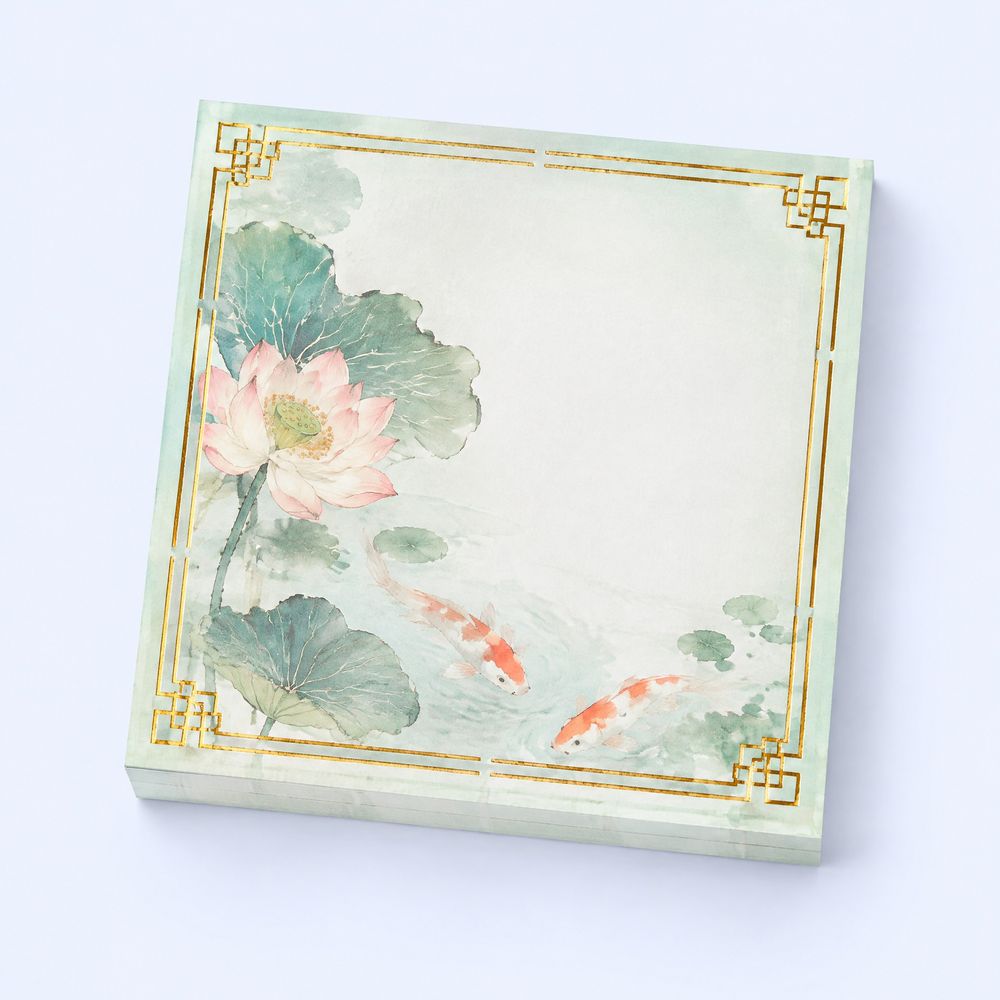
01Lotus & koi -
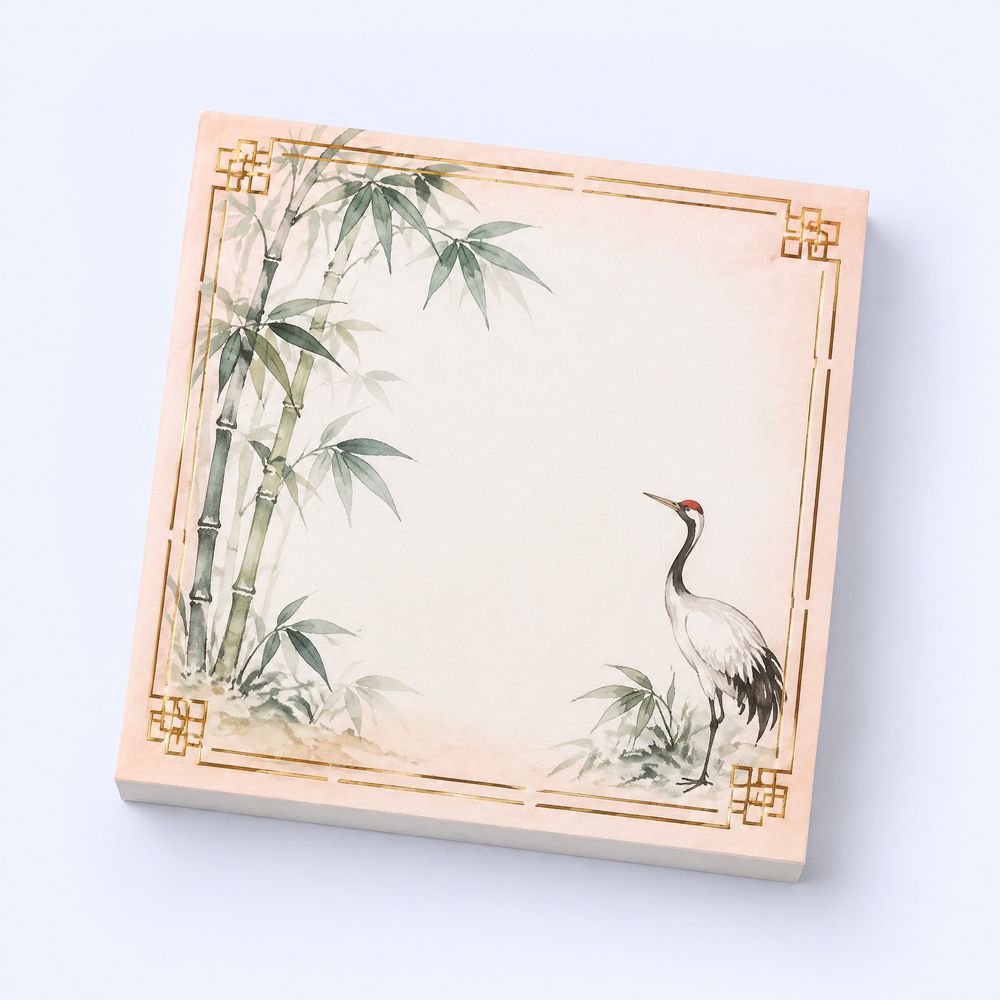
02Bamboo & crane -
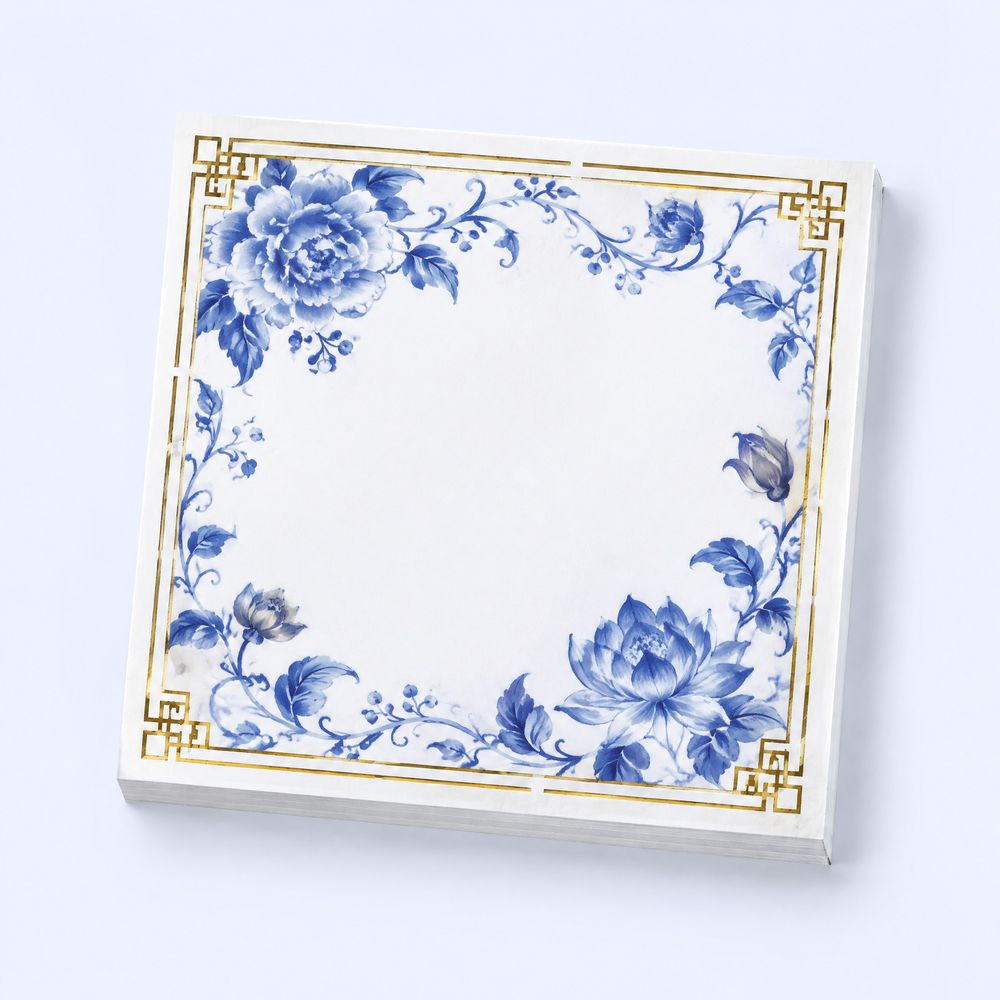
03Blue-and-white -
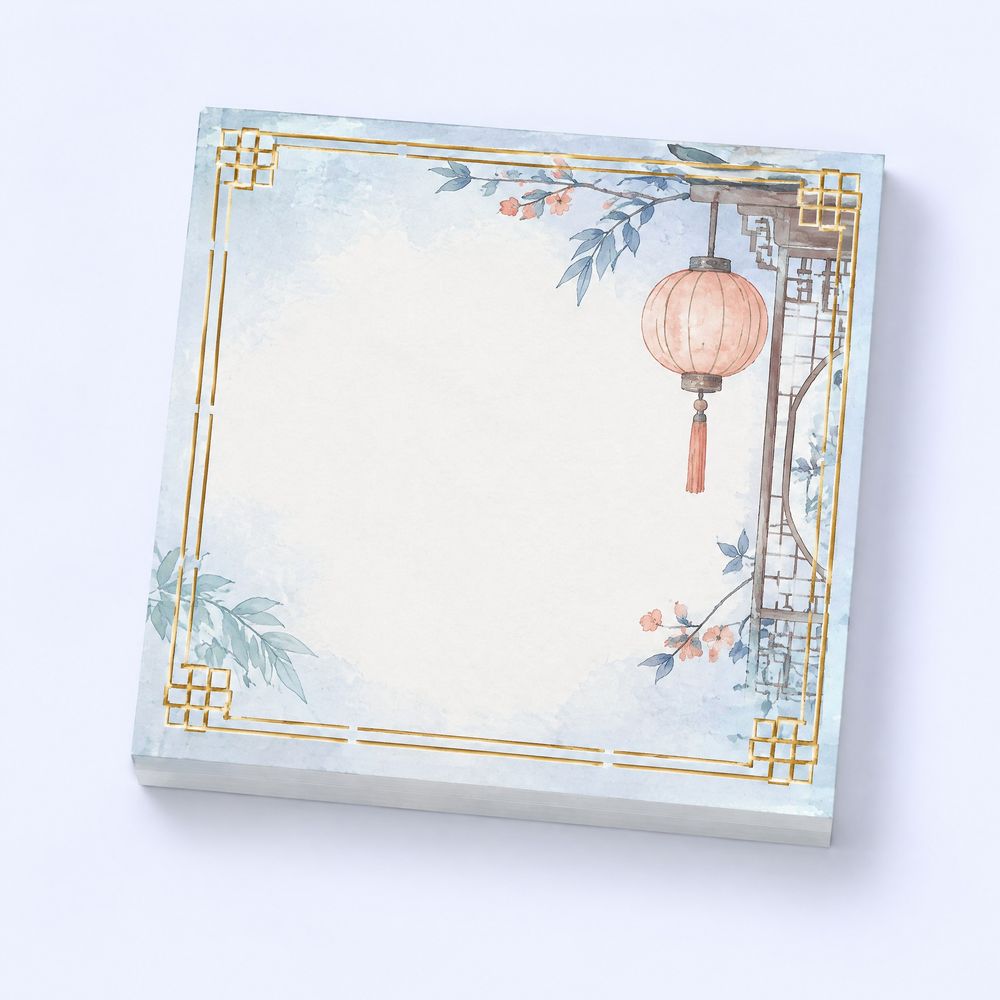
04Lantern & lattice
Four paintings, four moods: lotus and koi drifting in still water, bamboo with a crane standing in it, blue-and-white peonies borrowed from porcelain, and a red lantern hung beside a lattice window. Each motif keeps to one side of the sheet and leaves the middle quiet.
-
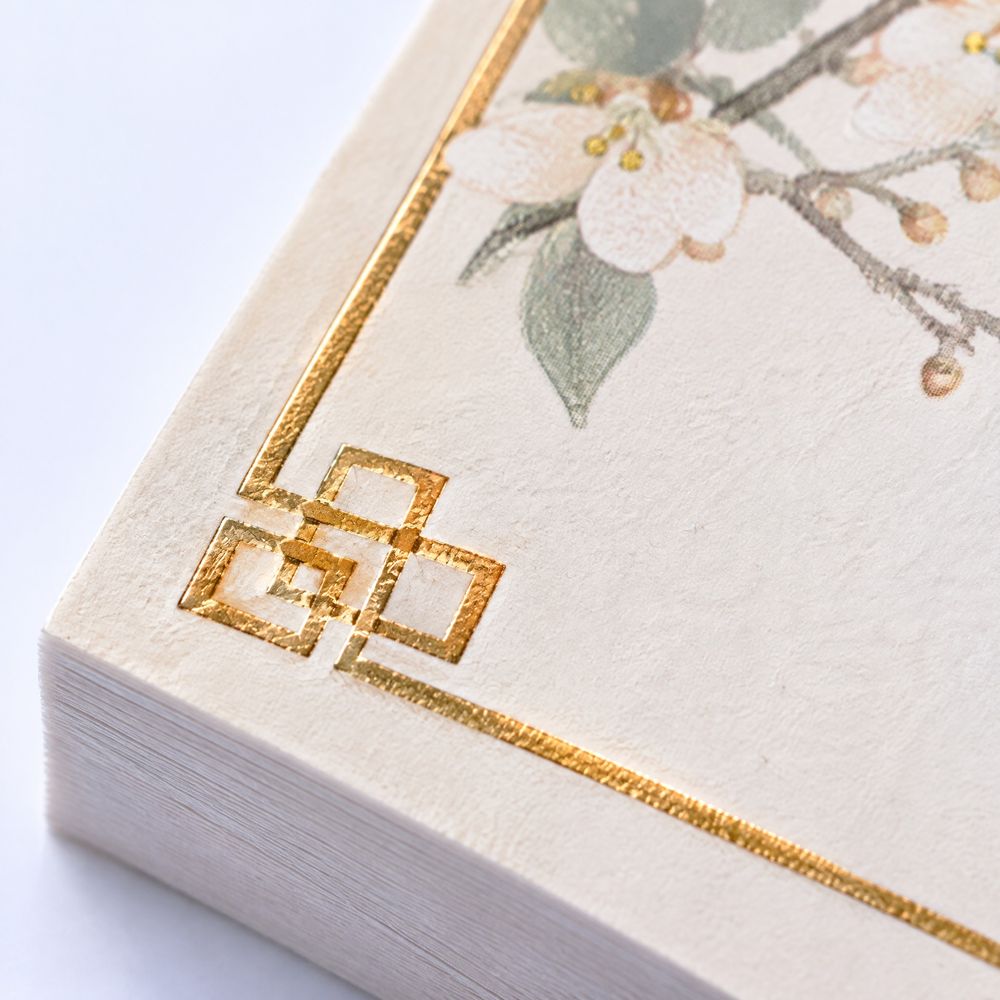
05Gilt corner, close -
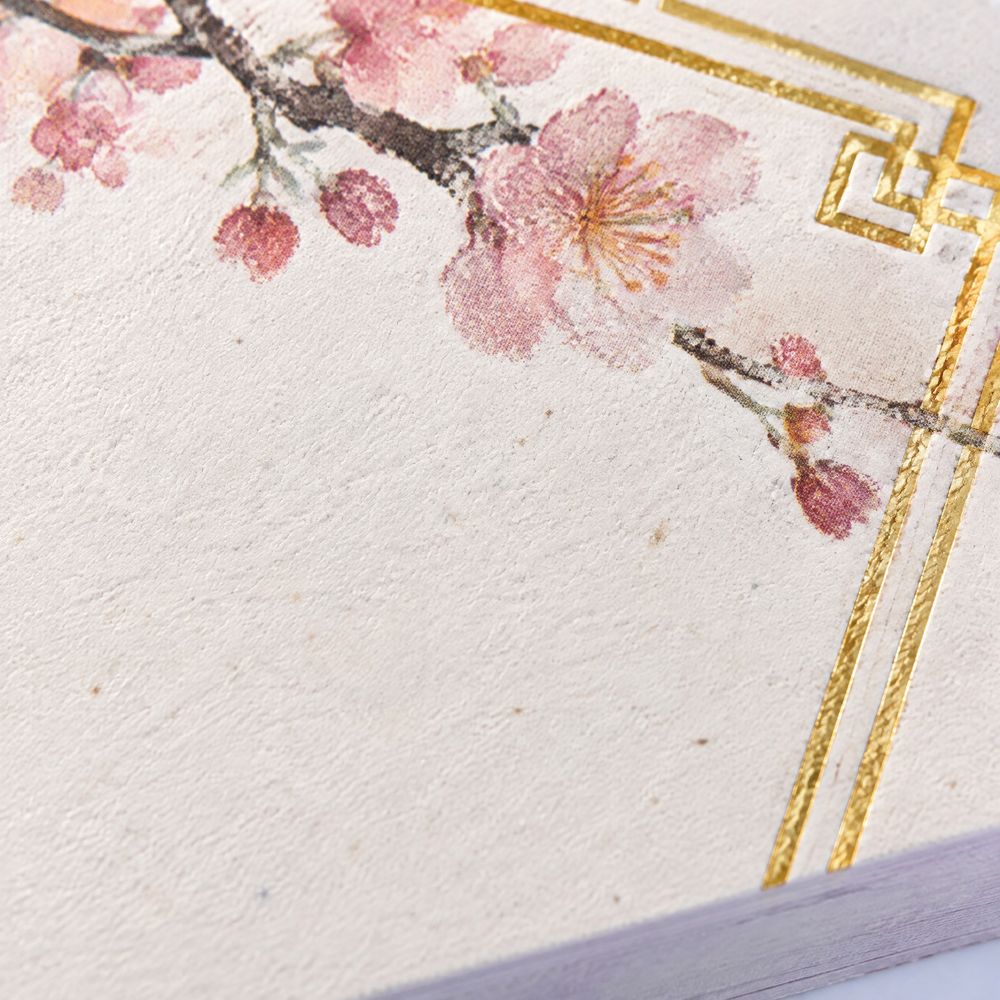
06Blossom close-up -
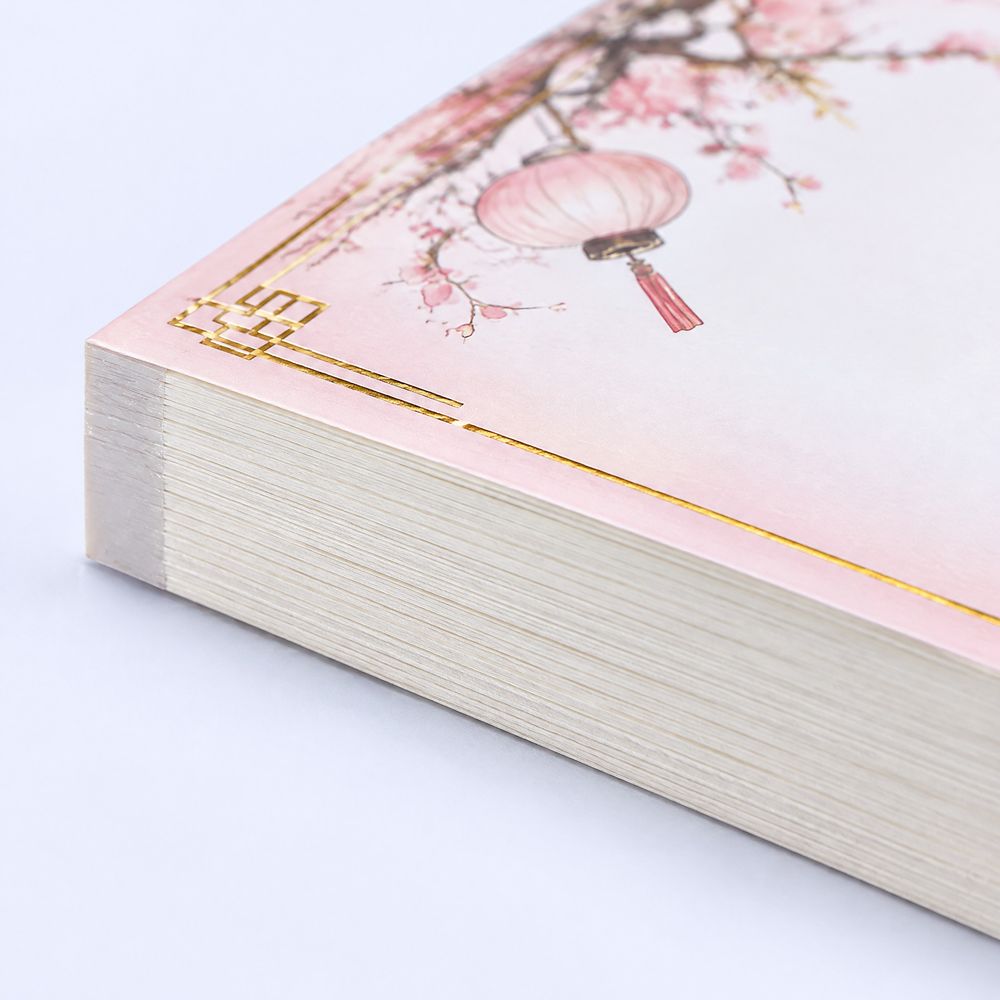
07Lantern stack -
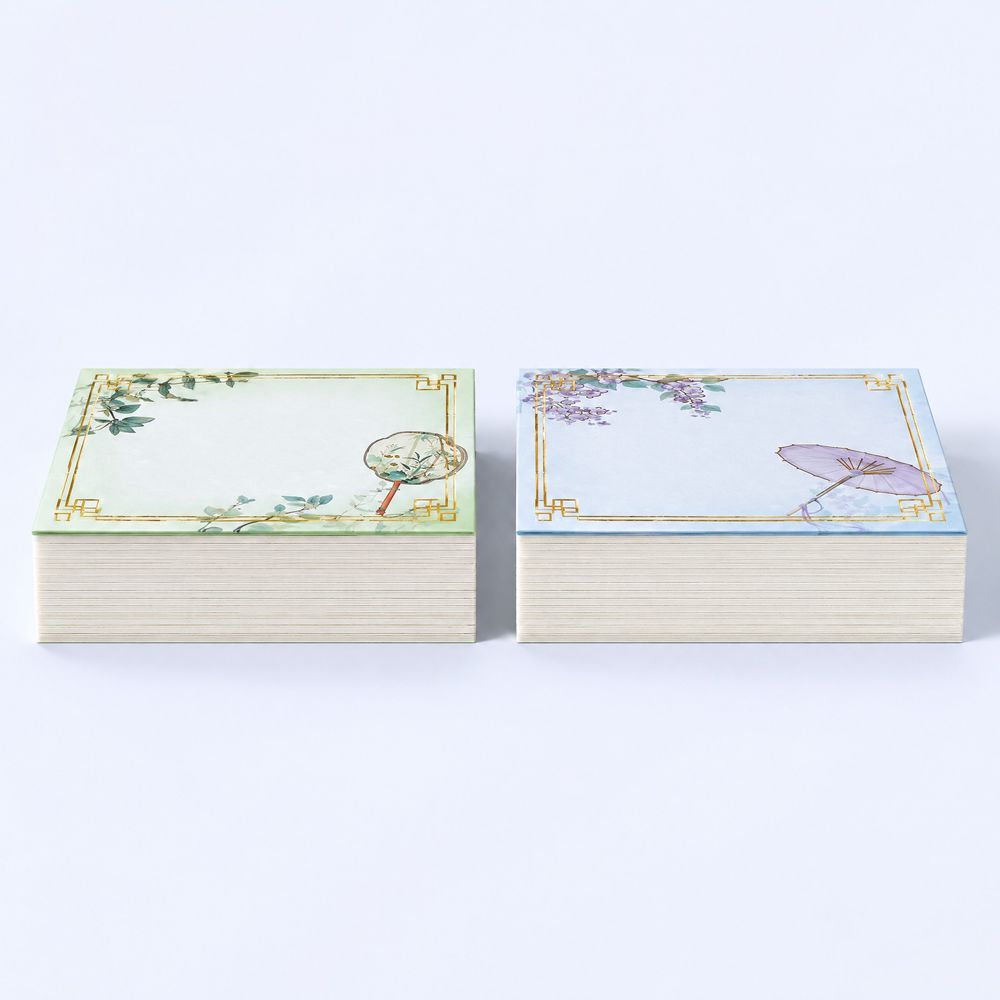
08Fan & parasol
The border is the constant — a foil-stamped fretwork line that turns the corner in a small double knot, drawn close in frames 05 and 06. Below it the cut edge shows the whole block at once: twenty-three sheets, squared, held by glue down one side.
-
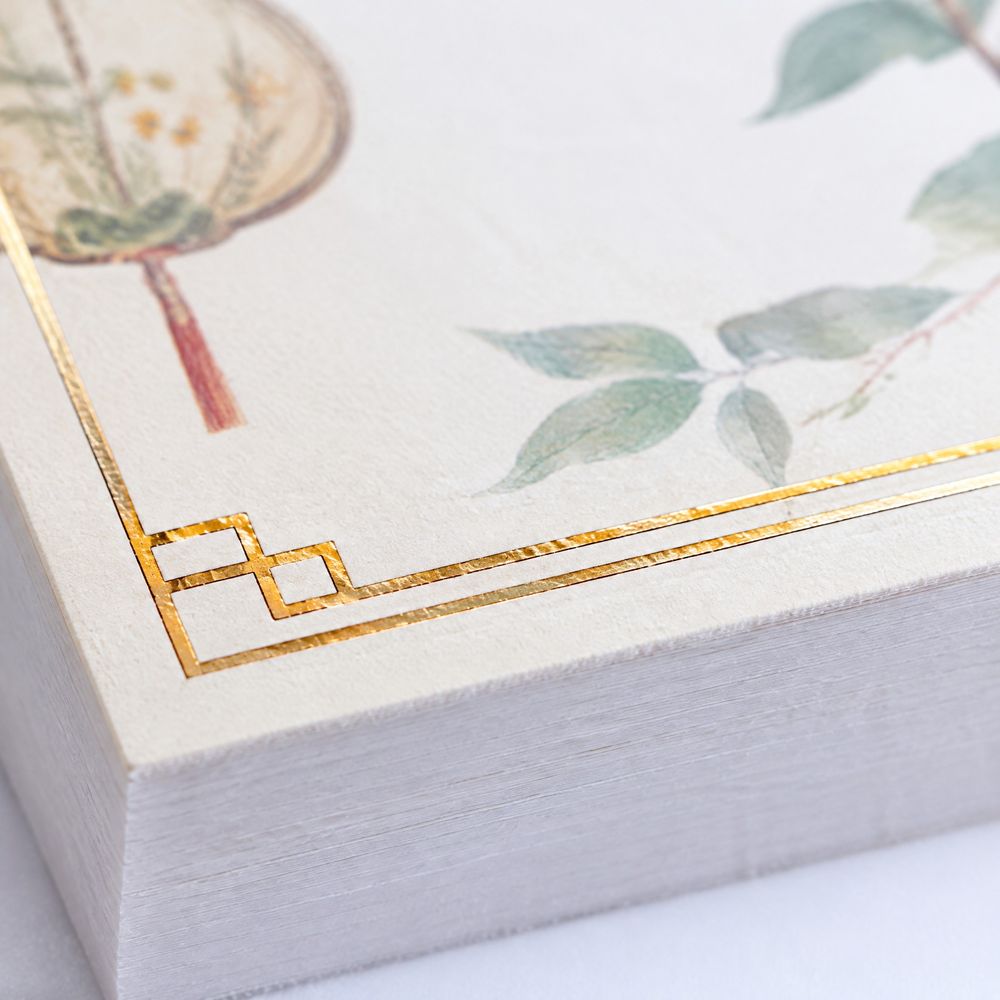
09Fan, close -
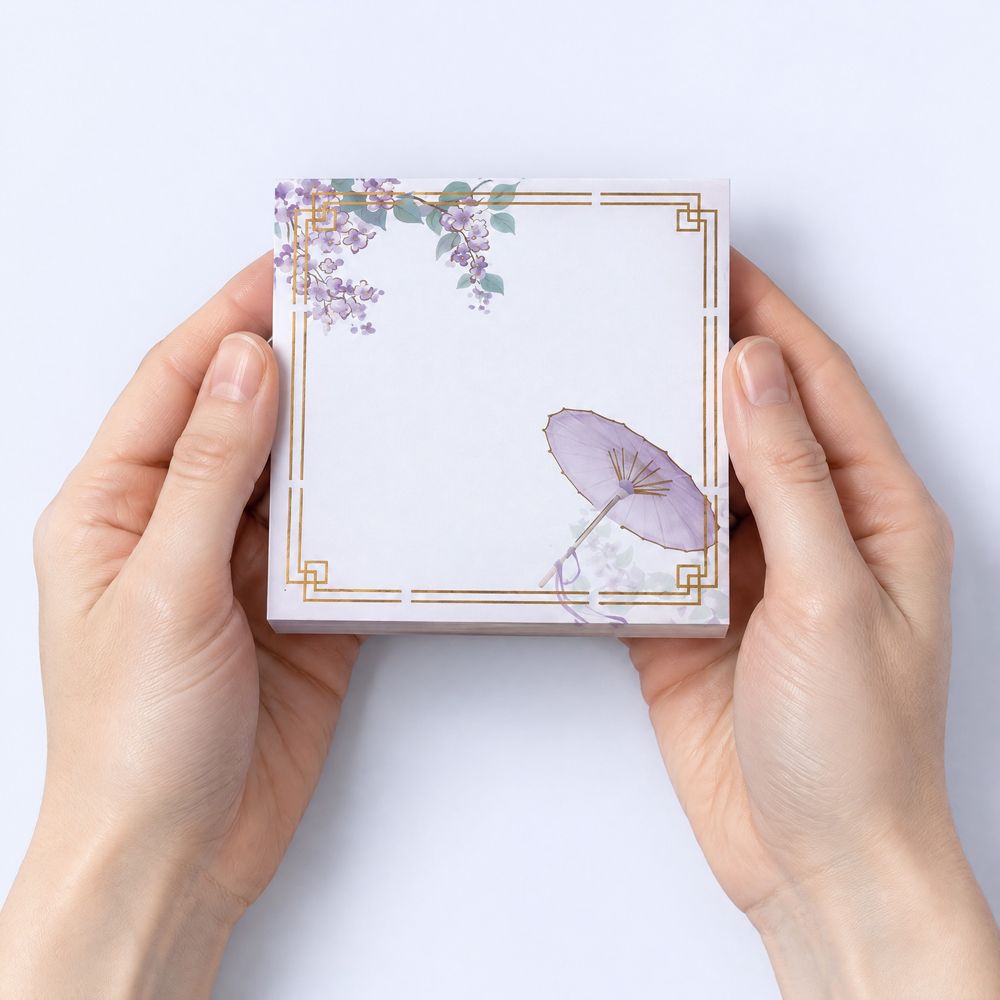
10Wisteria, held -
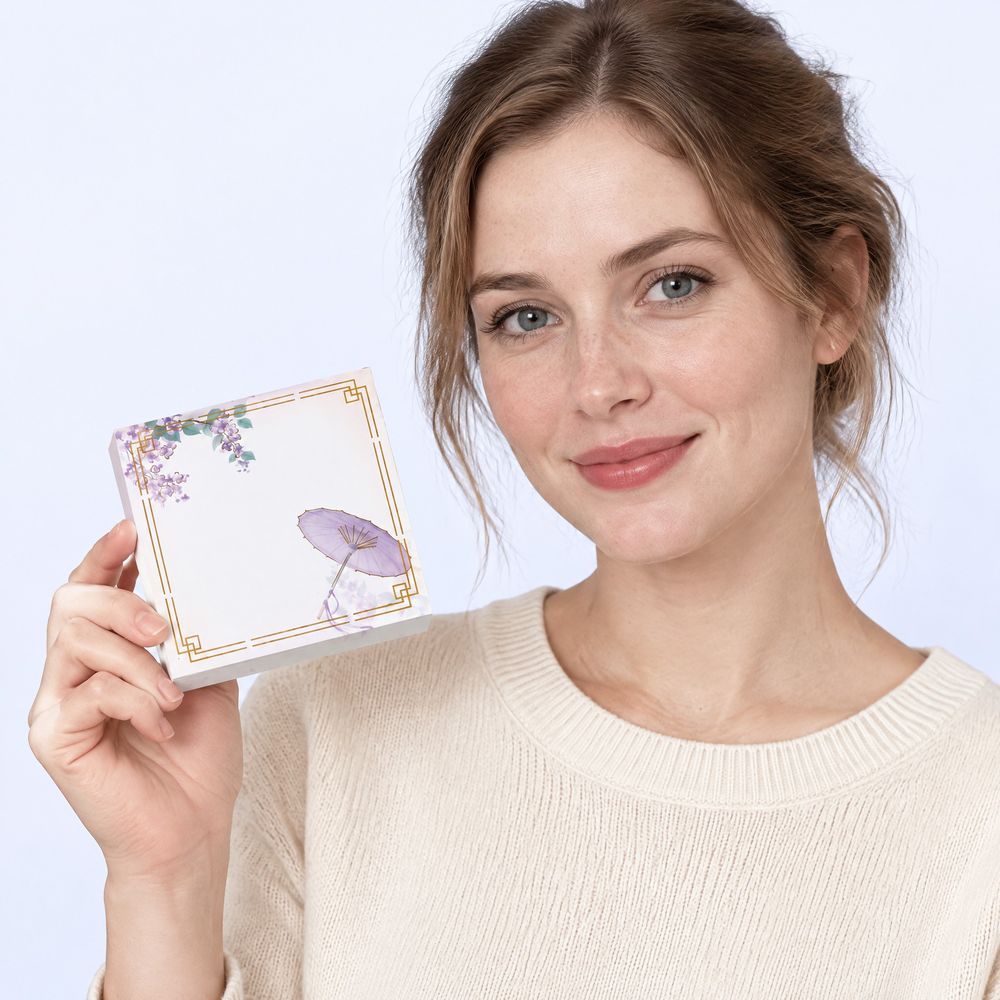
11Wisteria, in hand -
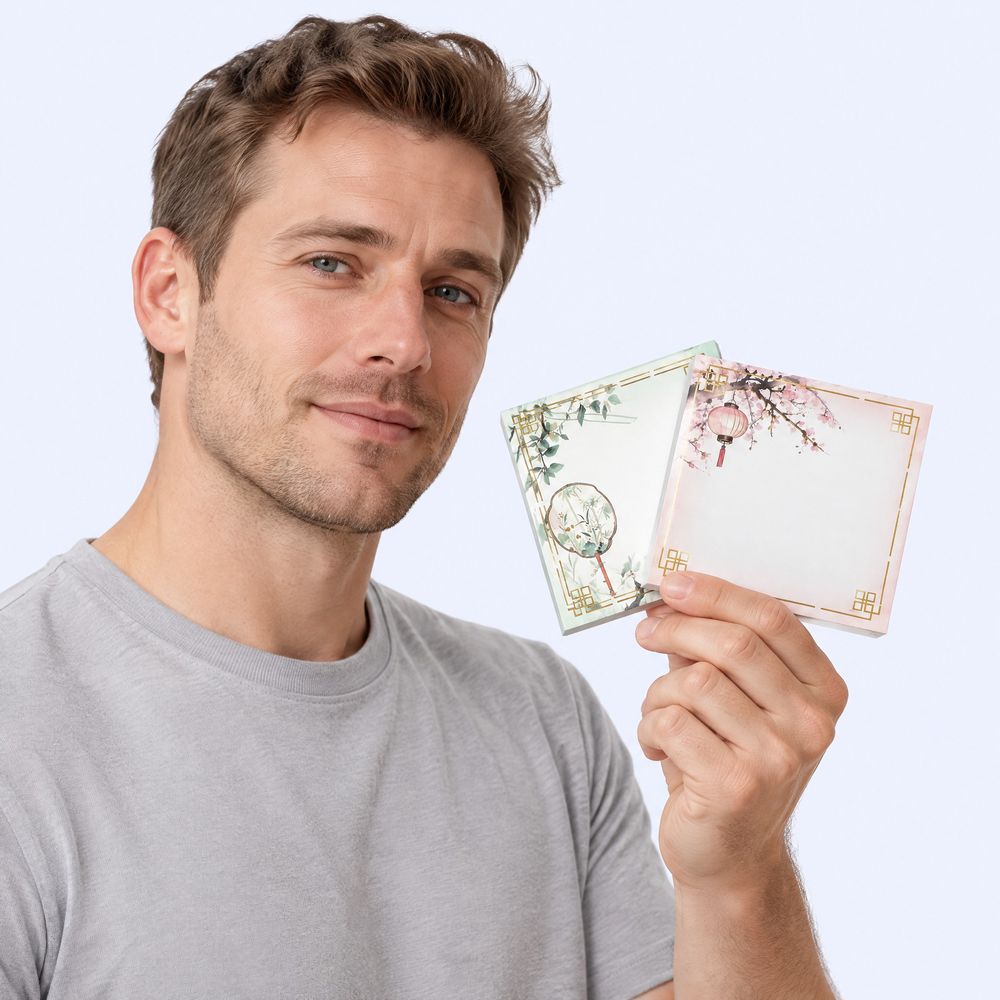
12Two pads, one hand
Frames 09 to 12 take the pad off the table and put it against a hand, a wrist, a shoulder. This is the closest the set comes to showing size, and the closest it comes to showing how thin a single sheet is once a corner lifts.
-
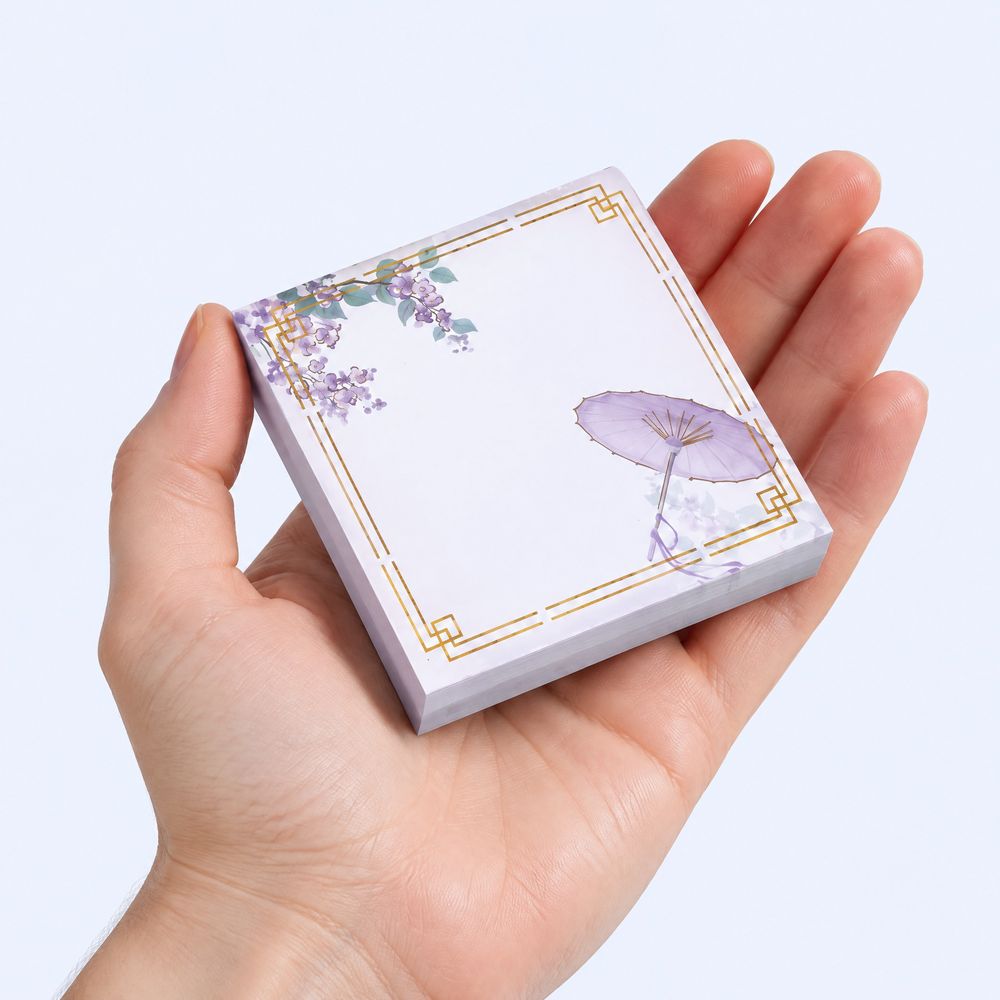
13Cradled, flat -
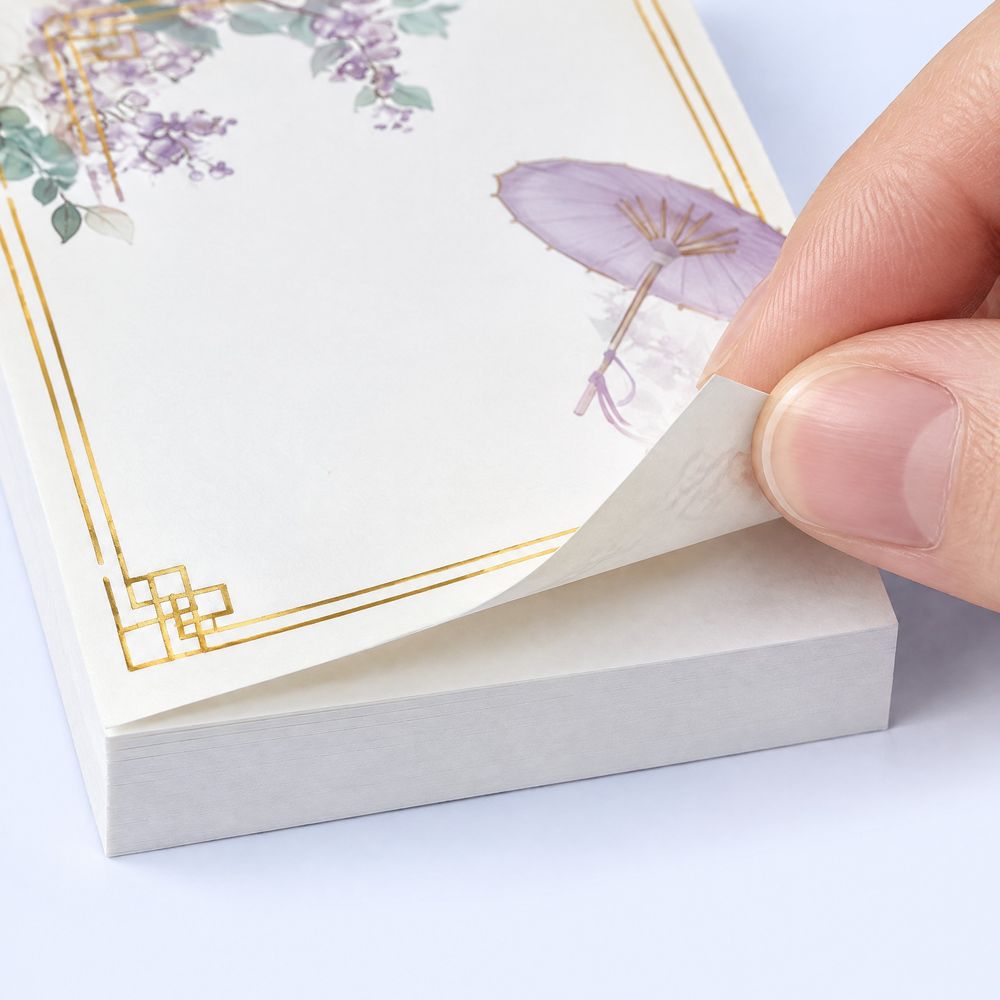
14Lifting a sheet -
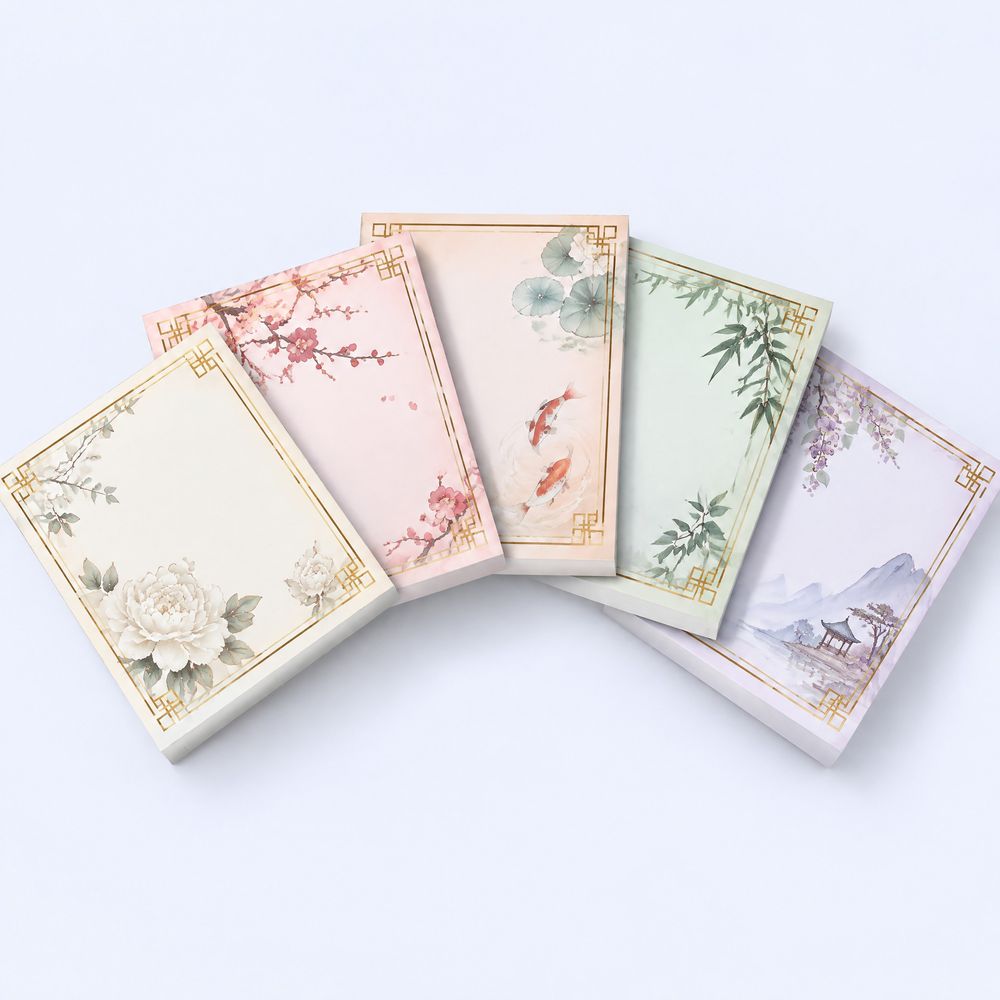
15Five, fanned -
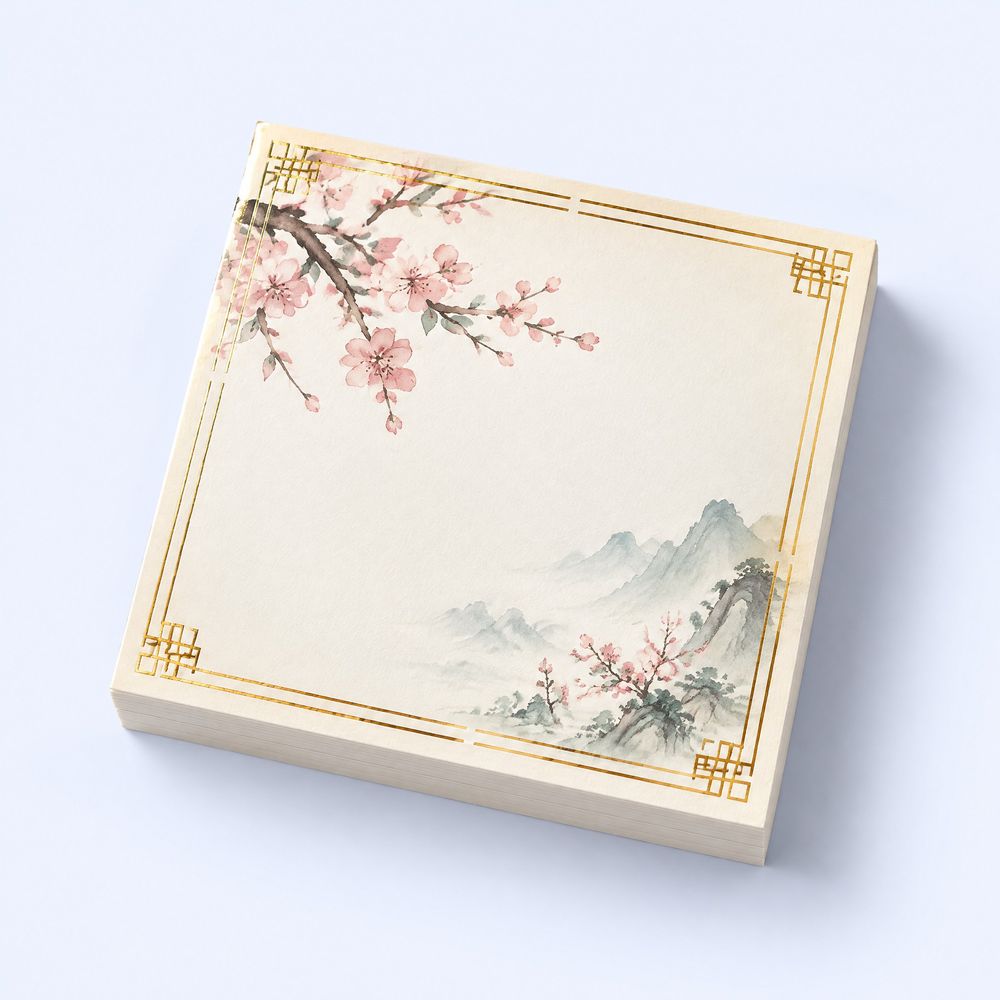
16Blossom & far hills
The last four step back and put designs side by side: one pad lying flat on a palm, a corner lifted off the block, five fanned so the borders line up, and a final sheet where blossom gives way to distant hills.
At a glance
Everything printed, stitched and stuck, in six lines.
Questions
What the photographs show, and what they do not.
What is it, in one line?
A square memo pad — twenty-three sheets glued along one edge, painted with watercolour florals and finished with a gold foil border.
Is the gold real foil, or printed gold ink?
Foil-stamped. The line sits slightly above the paper and changes brightness as the angle shifts; printed gold would stay flat and matte under the same light.
Where should I write?
The open centre. The motif occupies one side of the sheet and the middle is left deliberately empty for lists, notes or a short message.
Do the sheets come away cleanly?
Lift the top sheet from its free corner and draw it along the glued spine, keeping the pad flat. Pulling straight up is what creases the corner.
Which motifs appear in these sixteen frames?
Lotus and koi, bamboo and crane, blue-and-white porcelain flowers, a red lantern beside a lattice window, a round silk fan, a purple oil-paper parasol, wisteria, and blossom against distant hills.
Is every photo the same pad?
No. Most frames show a single pad; the fan and the side-on shots place several designs together so the motifs and borders can be compared.
How do I keep the foil looking sharp?
Keep the pad dry and away from loose keys or coins, since foil scuffs against hard edges. Store it flat, or standing on its glued spine.
Is anything printed on the sheets besides the artwork?
Nothing. No logo, no company name, no brand mark, no ruled lines — just the painting and the border.
Notes on the set
Three things sixteen photographs can and cannot tell you.
Scale
The camera flattens distance, so frames 09 to 15 put the pad against a hand instead of a ruler. Lying flat it sits inside an open palm with the corners showing; two pads fit in one hand without overlapping.
Colour
Watercolour is a thin wash, so the same motif prints a shade warmer or cooler from one pad to the next. Screens add a cast of their own — the pale ground behind these frames is the reference, not a neutral wall.
Paper
Twenty-three sheets, glued along one edge, printed on one side only. The reverse is left blank, which is why the block reads as a solid slab whenever the pad is turned on its side.