
Culture & Commerce
What Is the Point of Enamel Pins?
A 30-millimetre badge that does nothing, costs less than a sandwich and cannot hold a charge. Yet more than 30,000 people walked into a single pin-trading venue in Milan this year. The point of an enamel pin is not decoration — it is the cheapest piece of social infrastructure a person can wear.
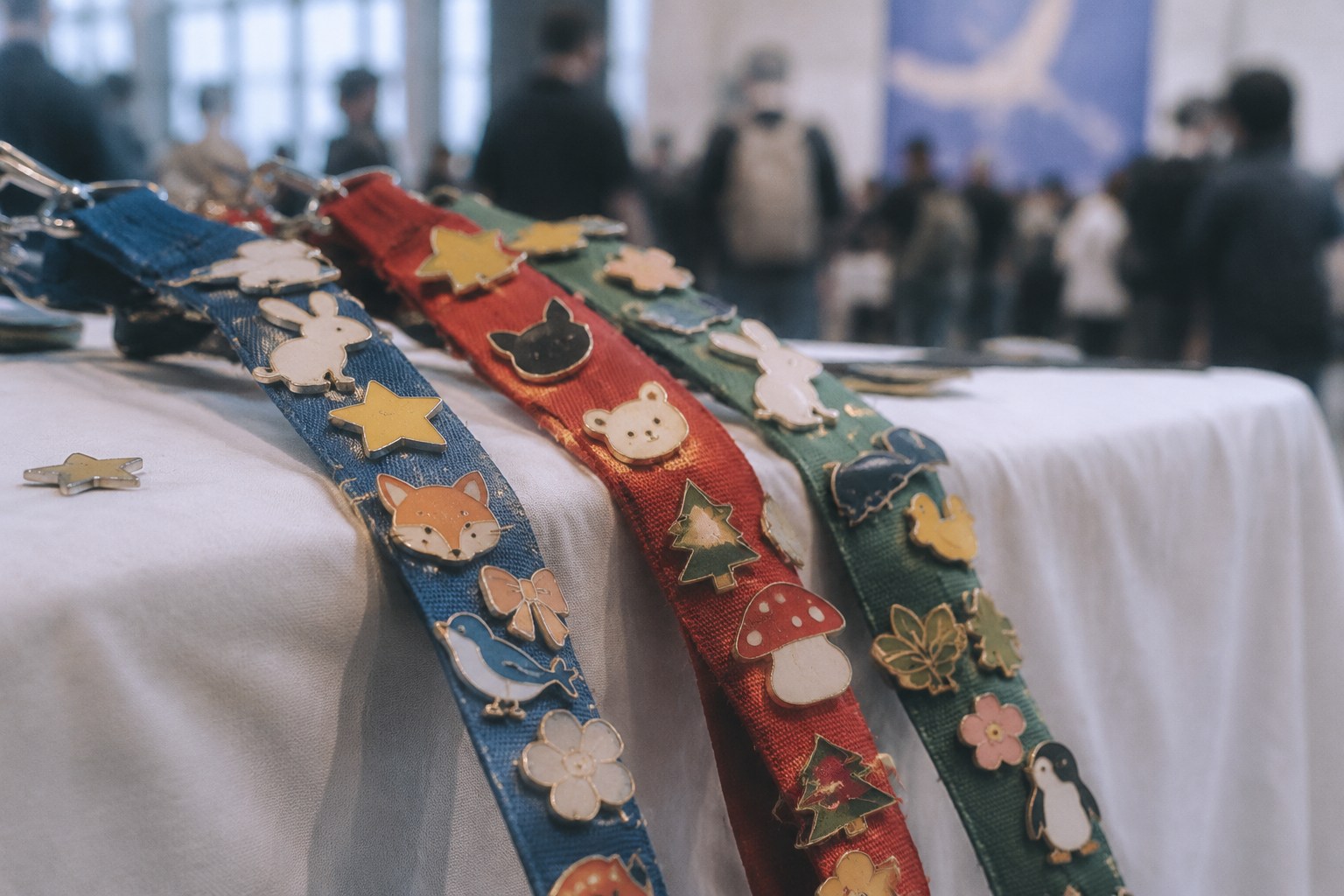
The short answer
An enamel pin is a small metal badge — usually brass or steel, 20–40 mm across — filled with coloured vitreous enamel and fastened with a butterfly or rubber clutch. Its point is threefold: it signals identity at a glance, it acts as a social protocol that gives strangers a reason to speak, and it is unusually efficient merchandise — high perceived value, one size fits all, cheap to ship, and priced at around €15 at the top of the market.
That is why pins survive while far more sophisticated gadgets disappear. They are less a product category than a piece of low-tech social software: a way to broadcast "this is my tribe" to the handful of people who will recognise the signal — and an excuse to start a conversation with them.
| What is an enamel pin made of? | A stamped metal base with recessed colour fields filled with enamel, then plated in gold, silver, brass or black nickel. |
|---|---|
| Standard retail price | Roughly €8–15 for a well-made 25–30 mm pin; some licensed pins sold at €15 each on the Milan 2026 official pin wall (NPR, Feb 2026). |
| Category size | The specialty-pins market — custom, enamel and lapel pins — was estimated at USD 3.2 bn in 2024, projected to reach USD 5.1 bn by 2033. Vendor estimate (Dataintelo), not an audited figure. |
| Peak public moment | 30,000+ visitors to the Official Olympic Pin Trading Center in Milan, per sponsor Warner Bros. |
| When did trading start? | Pins appeared at the 1896 Athens Games; modern pin trading took shape in the 1980s, with the first official trading centre at Calgary 1988. |
| Why not just a sticker? | Pins survive washing, weather and years of wear, and their small physical cost makes them feel earned rather than handed out. |
1. A pin is a sentence you can wear
Most identity signals are either too loud or too expensive. A tattoo is permanent. A T-shirt with a slogan is a billboard. A pin sits in the narrow band in between: you can change it in five seconds, it costs about as much as lunch, and it is legible only to people who already share the reference.
That specificity is the whole point. A pin does not say "I like music"; it says "I was at that specific show in that specific year." The narrower the signal, the more valuable it is to the few people who can read it — and the lower the risk to the wearer, because a pin that misfires can simply be removed.
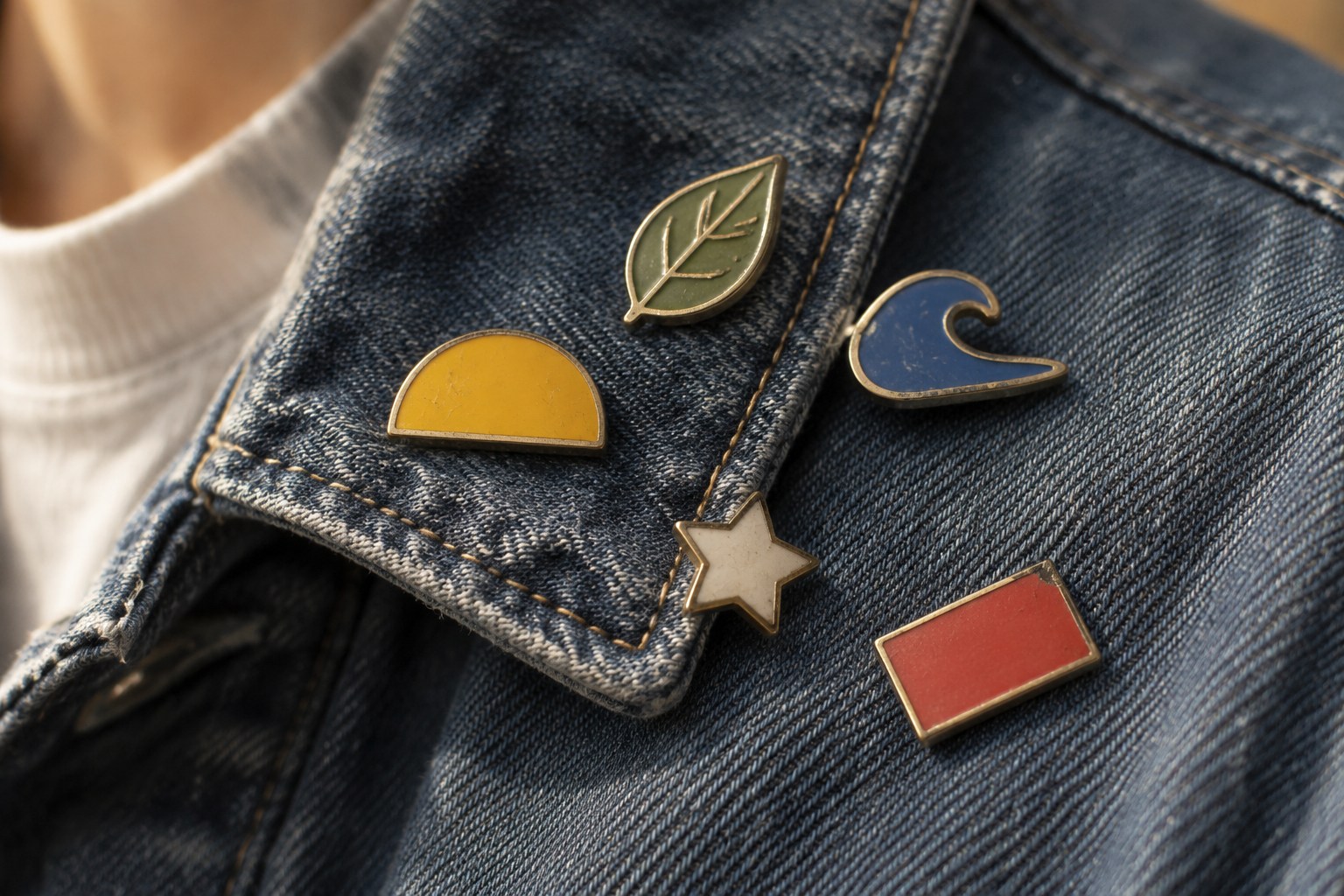
Pins are sold as souvenirs, branded merchandise, fashion accessories and small-scale artwork, and they are traded at theme parks and resorts such as Walt Disney World and Disneyland, at sporting events including the Olympic Games, and at youth tournaments such as the Little League World Series. The format has spread so widely because the object is trivially cheap to produce and endlessly re-skinnable.
2. The evidence is the queue in Milan
The strongest argument for pins is not a marketing deck. It is a line of people outside a building in central Milan in February.
At the 2026 Winter Olympics, the Games got a dedicated venue for the hobby: the Official Olympic Pin Trading Center, sponsored by Warner Bros. and branded around Looney Tunes. More than 30,000 people passed through it, according to the sponsor. Inside, around a dozen high-top tables held the personal collections of traders from 18 countries across three continents; each trader worked a three-hour shift, and many rotated through more than once.
The economics inside the room were oddly pure. Nobody sold pins to other traders. "You don't buy pins from traders. You buy a pin, and then you trade," said Marcelo Flores of HONAV USA, which designs pins for Italy and Team USA. A wall of licensed pins sold at about €15 each, and a "pin of the day" was rationed to two per person — one to keep, one to trade.
"It doesn't matter what language you speak, you can do a pin trade."
What people described was not shopping. It was a conversation protocol with a souvenir attached. "You just look at them, you point at your necklace and look at theirs, like, 'I really like your pins, you want to trade?' And then boom, next thing you know, you're having a conversation for 20 minutes," said Jonathan Jimenez, a Pepperdine University student attending his first Games. "When you share that passion, people want to take you in with open arms."
Janet Grissom, a psychiatrist from Salt Lake City volunteering at a trading table, put the mechanism more precisely. Pins, she said, "sort of have a language all of their own."
All Olympic reporting and quotations in this section: Rachel Treisman, NPR, 21 February 2026.
3. Why brands keep minting them
For an organisation deciding what to put its logo on, pins solve several problems at once.
- No sizing, no seasons. Apparel needs a size curve, a fit model and a plan for unsold stock. A pin has one SKU. It weighs almost nothing, ships in a padded envelope, and does not date the way a cut of jacket does.
- High perceived value against a low unit cost. A pin reads as a real object — metal, enamel, a clasp — in a way a sticker or a digital badge does not, while staying cheap enough to give away at a conference.
- Ambassadorship that travels. A lanyard pin follows its owner into airports, meetings and photographs. It is one of the few branded objects people choose to wear after the event ends, which is why the format persists across political campaigns, sports federations, universities, unions and software conferences.
- A collector loop. Limited runs, "pin of the day" rationing and convention exclusives turn a giveaway into a hunt. Rationing is not a supply failure; it is the mechanism that keeps the object interesting.
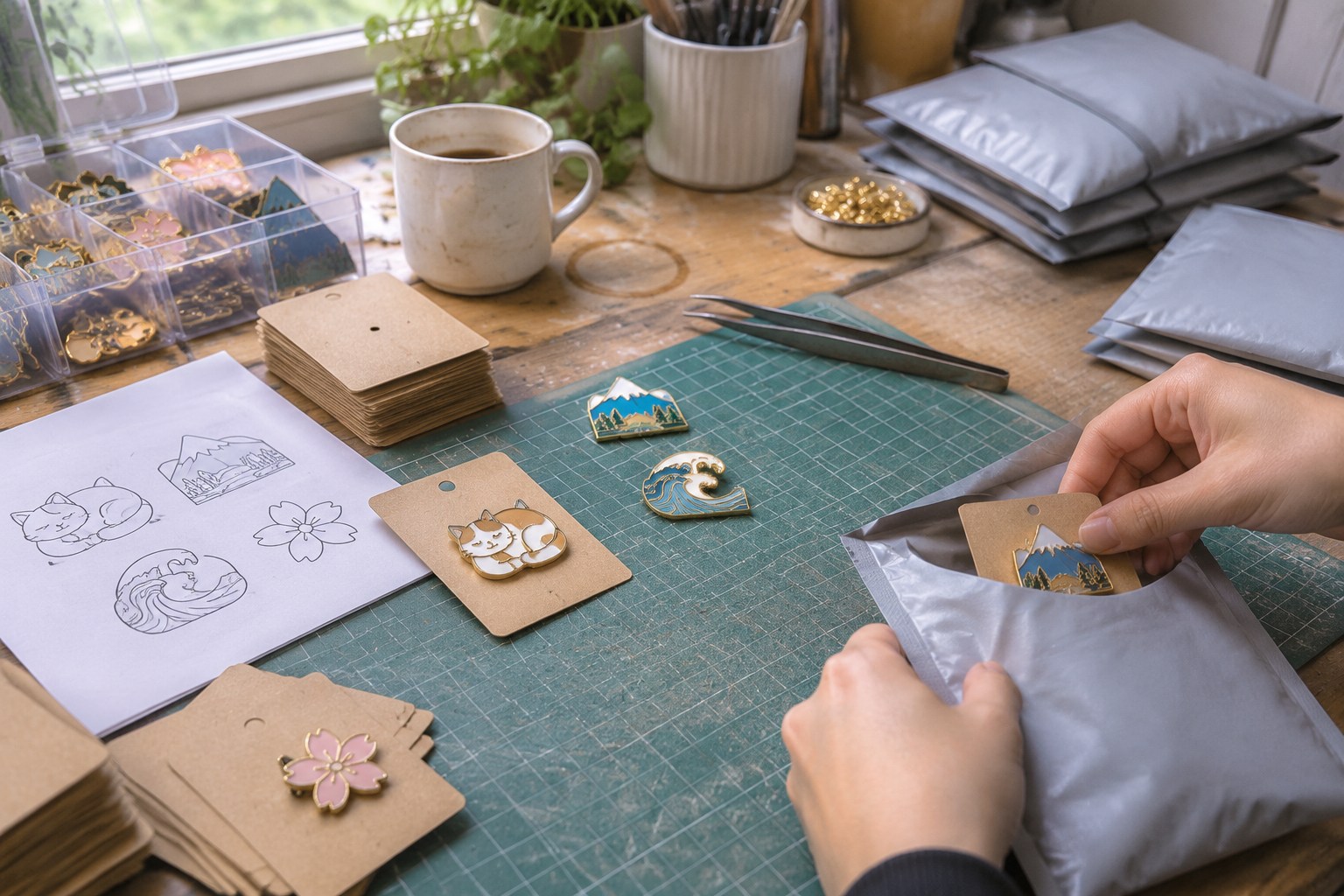
The category is not enormous, but it is durable. One third-party estimate circulating in late 2026 puts specialty pins — custom, enamel and lapel — at USD 3.2 bn in 2024, rising to USD 5.1 bn by 2033. Treat that as a directional vendor estimate rather than a measured market: the category is fragmented across thousands of small studios, and much of the volume never appears in a research report.
4. What the wearer actually gets
Away from the trade floor, the uses are more personal than commercial.
- Membership. Fandom pins, club pins and team pins mark belonging in a group small enough to feel like a room rather than an audience. In Japanese fandom culture the practice produced its own object: the ita bag, a bag with a clear window panel designed to display a curated cluster of character pins and badges.
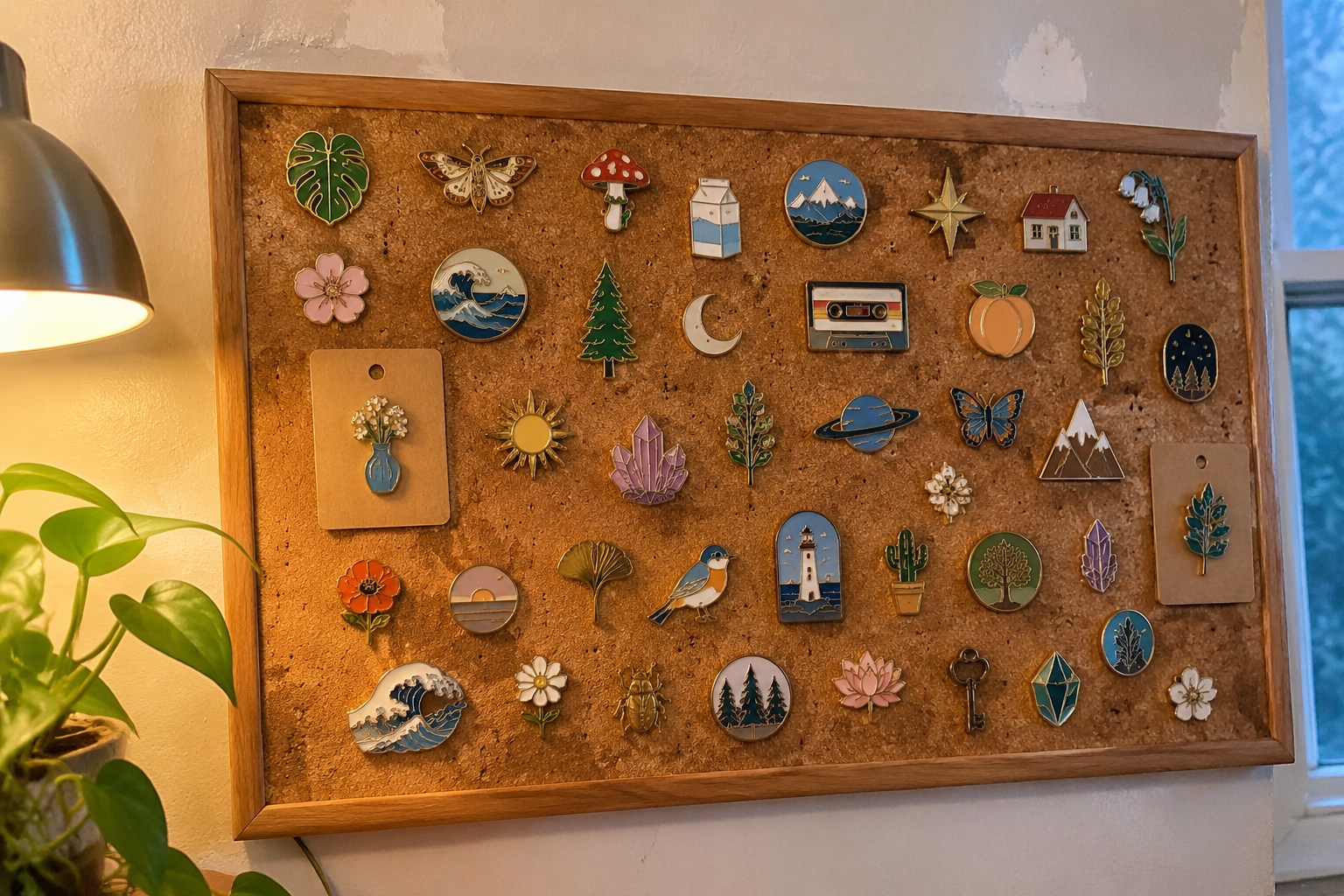
- Memory. Collections often work as a physical diary. Molly Schmidt, volunteering at the Milan trading centre, was handing out a set her uncle had made for her: pins carrying the flags of the eight host cities her late father had attended. "The Olympics always brought him so much joy," she told NPR. "I do feel really close to him through doing this."
- A social opening. For people who find introductions difficult, a pin is a pre-written first line. Jimenez, who said he was trying to shed some of his introversion, credited the format with helping him talk to 20 people at a single hockey match.
- A little economy. Collections appreciate unevenly and trade unevenly. Grissom said she sells her more valuable pins online to fund Olympic travel, and has broken even in the past. "One person's trash pin is another person's treasure pin," said Schmidt — which is, more or less, the definition of a functioning secondary market.
5. What pins are bad at
The honest case against pins is not that they are pointless. It is that most of them are badly made, and that the format invites a kind of decorative over-consumption.
- Quality is wildly inconsistent. The same artwork can become a crisp, weighty object or a chipped, dull trinket depending on enamel type, plating thickness and quality control. Buyers who cannot tell the difference still pay similar prices.
- Cheap pins are close to disposable. A soft-enamel pin on thin steel with a single plastic clutch will lose its finish, bend at the post and end up in a drawer. At volume, that is a small but real waste stream attached to a category that often markets itself as meaningful.
- IP and licensing are live risks. Pins sit close to fan art, which is why conventions and marketplaces have spent the past decade tightening rules on unlicensed character merchandise. For brands, a pin is a trademark asset, not a free-for-all.
- They are a weak sustainability signal. A pin can carry a message about recycling; it cannot demonstrate it. The object's footprint is small, but its message is often larger than its substance.
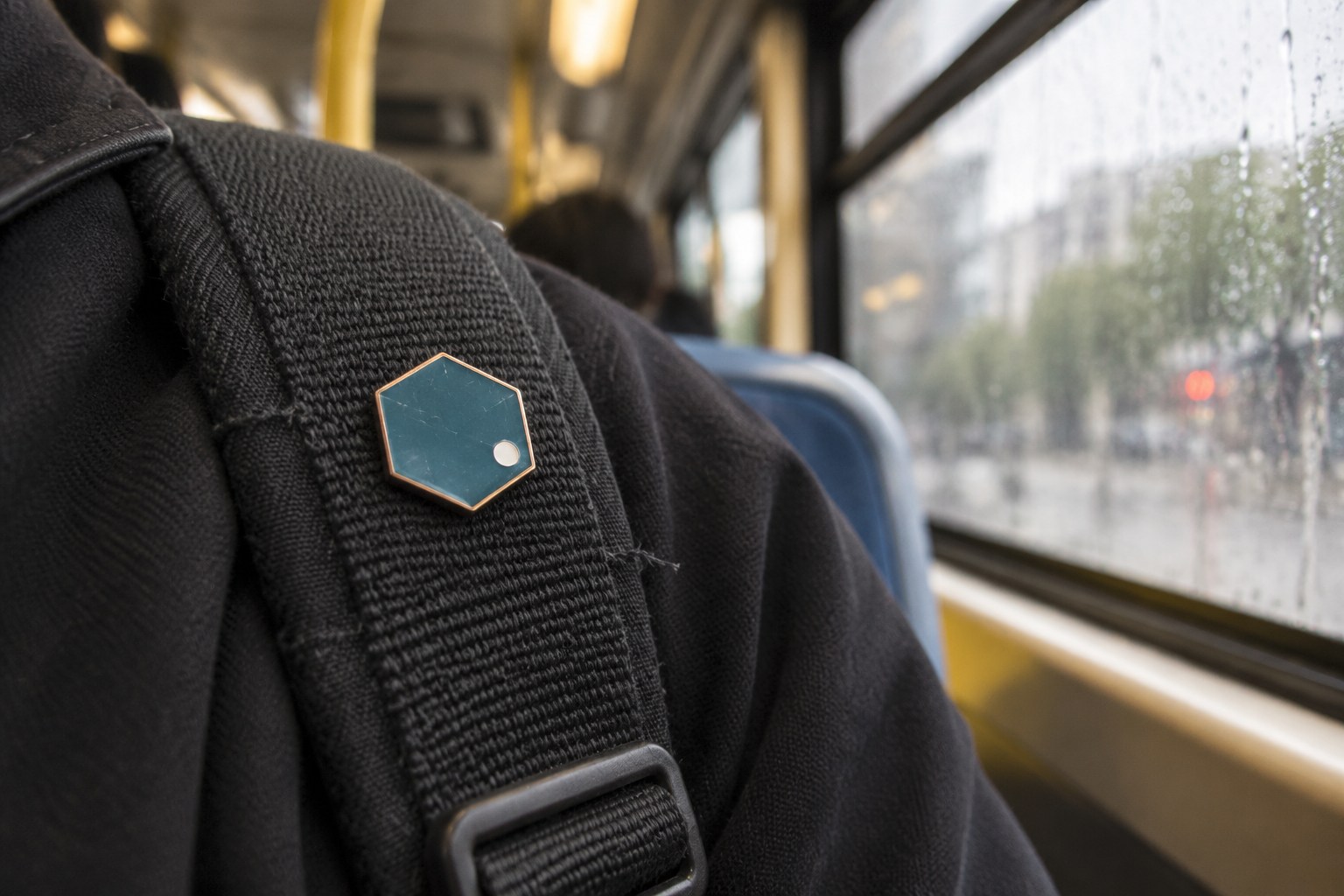
6. How to judge an enamel pin in ten seconds
For buyers, the difference between a good pin and a bad one is visible without a loupe.
- Hard or soft enamel. Hard enamel is polished flat, so the metal lines sit level with the colour. Soft enamel is recessed, giving a textured, slightly sunken surface. Hard enamel costs more and photographs better; soft enamel holds sharper line work.
- Plating. Look for an even, dense finish with no patchiness on the edges. Brass and copper show wear fastest; gold and black nickel hide it longest.
- The metal lines. On a good pin, colour stops cleanly at the metal. Bleeding, bubbles and overflow are the three reliable tells of a cheap run.
- The back. Two rubber clutches or a locking back hold better than one plastic butterfly. A debossed or etched logo on the reverse is a sign the maker expects the pin to be examined.
- Thickness and weight. Anything under about 1.5 mm feels flimsy in the hand; 2 mm and up reads as a proper object.
- Colour against the artwork. Compare the enamel with the original design in daylight. Saturated colours often shift a full shade in production.
7. FAQ
What is the point of enamel pins?
Enamel pins are cheap, durable identity signals and conversation starters. They let someone broadcast a specific interest or membership to the people who recognise it, give strangers an easy reason to interact, and function as low-cost, high-perceived-value merchandise for brands and events.
Are enamel pins still popular in 2026?
Yes. The Official Olympic Pin Trading Center in Milan drew more than 30,000 visitors in February 2026, and the hobby is embedded in theme parks, sports events and fandom conventions. The category is fragmented rather than booming, with growth driven by small studios and limited drops.
How much do enamel pins cost?
Well-made 25–30 mm pins typically retail for roughly €8–15, and licensed pins at the Milan 2026 official pin wall sold for about €15 each. Wholesale prices fall sharply with volume, which is why pins are popular as giveaways.
What is the difference between hard and soft enamel pins?
Hard enamel is filled and then polished flat, so the surface is smooth and the metal lines are level with the colour. Soft enamel keeps the colour recessed below the metal, producing a textured surface with sharper edges on the lines. Hard enamel is more durable and more expensive.
Why do people trade pins at the Olympics?
Pin trading gives attendees — athletes, journalists, volunteers and spectators — a structured way to meet each other across languages. Pins appeared at the 1896 Athens Games, the modern trading culture formed in the 1980s, and the first official trading centre opened at the Calgary Winter Games in 1988.
Is selling enamel pins a viable business?
It can be, at small scale and with tight design control. The constraints are design differentiation, minimum order quantities and licensing exposure rather than demand: the format is cheap to produce, light to ship and easy to collect, but the market rewards distinctive art far more than generic badges.
Key takeaways
- An enamel pin's value is social, not functional: identity signal, conversation protocol, collectible.
- Milan 2026 is the clearest evidence — 30,000+ visitors to a dedicated pin-trading venue, traders from 18 countries.
- For brands, pins are unusually efficient merchandise: one SKU, low weight, high perceived value, around €15 at the top of the retail market.
- Quality varies enormously; hard versus soft enamel, plating and the cleanliness of the metal lines are the deciding factors.
- The category is durable but fragmented, and third-party size estimates should be treated as directional.
Sources
- Rachel Treisman, "Pin trading has taken over the Olympics. Here's what it's like in Milan," NPR, 21 February 2026.
- "Pin trading and collecting," Wikipedia, accessed 16 November 2026.
- Dataintelo specialty-pins market estimate, cited in an industry press release, 9 November 2026. Vendor estimate; not independently audited.
- Warner Bros. Discovery Sports, statement on the Milano Cortina 2026 pin trading centre.
- International Society of Olympic Historians, Journal of Olympic History.
Editorial note: the photographs in this article are original editorial illustrations created for this piece rather than on-location press photographs, and are captioned accordingly. Figures attributed to sponsors or research vendors are reported as supplied and have not been independently audited.